

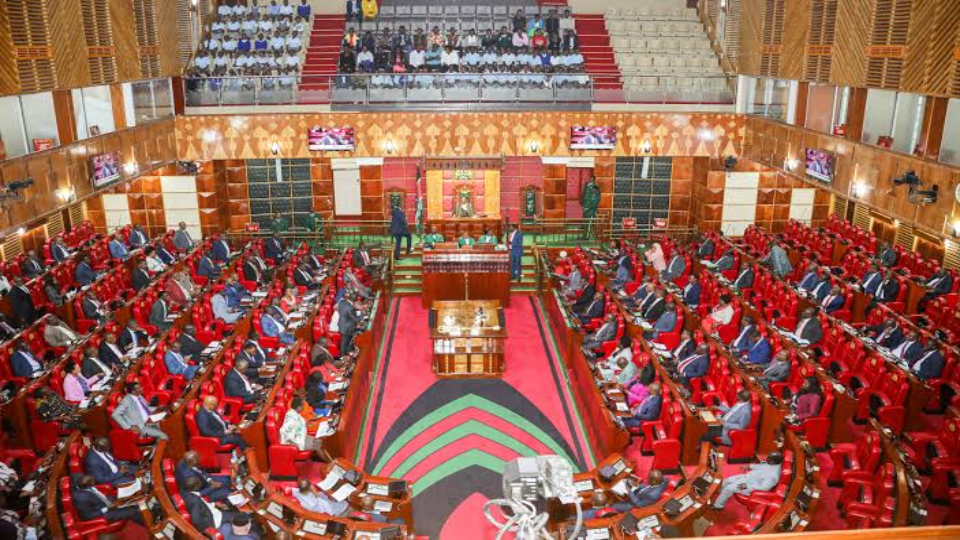
Parliament Resumes to Address Packed Legislative Agenda
The National Assembly and Senate are set to reconvene on Tuesday, September 23, 2025, following an extended recess, with a robust legislative agenda awaiting both houses. The parliamentary sessions will focus on critical tasks, including the vetting of key nominees, debates on constitutional amendments, economic agreements, and a slate of transformative bills aimed at reshaping Kenya's economic and governance landscape.
The National Assembly will prioritize the vetting of nominees for significant roles, including High Commissioners, Ambassadors, Consuls-General, the Registrar and Assistant Registrar of Political Parties, and the Chairperson of the Kenya National Commission on Human Rights (KNCHR). These appointments are pivotal to strengthening Kenya's diplomatic and human rights frameworks.
Beyond vetting, the Assembly will deliberate on several high-stakes legislative items. Among them is Sessional Paper No. 2 of 2025, which proposes the privatization of the Kenya Pipeline Company (KPC). MPs will also review the Comprehensive Economic Partnership Agreement between Kenya and the United Arab Emirates (UAE) and the agreement establishing the Shelter Afrique Development Bank. Additionally, an agreement with Singapore on eliminating double taxation and preventing tax evasion will be tabled for debate, aiming to bolster Kenya's international economic relations.
A cornerstone of the National Assembly's agenda is the Virtual Asset Service Providers (Amendment) Bill (No. 15 of 2025), sponsored by Molo MP Kuria Kimani. This bill seeks to regulate Kenya's burgeoning digital asset sector by mandating licenses from authorities such as the Central Bank of Kenya, the Capital Markets Authority, or a proposed Virtual Assets Regulatory Authority. Kimani emphasized the bill's potential to transform Kenya's digital economy, noting that the country has approximately 6.1 million virtual asset users and could attract Sh130 billion in foreign direct investment, creating 25,000 jobs in the next year. He also highlighted Kenya's strong position in the digital asset market, ranking third in Africa with Sh258 billion traded through decentralized protocols, liquidity aggregation, and synthetic platforms in the past year.
Another significant proposal is the Kenya Roads (Amendment) (Number 3) Bill (No. 34 of 2025), sponsored by Homa Bay Town MP Peter Kaluma. This bill aims to classify public roads into national trunk roads and county roads, transferring the management of county roads to devolved governments. Kaluma explained that this classification would clarify responsibilities for road maintenance, rehabilitation, and development, aligning with the Constitution's Fourth Schedule. The bill also proposes amendments to the Kenya Roads Board Act to allocate proceeds from the Road Maintenance Levy Fund directly to county governments, ensuring dedicated funding for local road projects.
The Privatisation Bill (No. 36 of 2025), sponsored by National Assembly Majority Leader Kimani Ichung'wah, is another key focus. This bill aims to overhaul the privatization framework by establishing a Privatisation Authority to oversee and coordinate privatization efforts. It includes provisions for the authority's functions, administration, and the appointment of its Managing Director, Corporation Secretary, and staff, with the goal of enhancing efficiency in privatization processes.
Additional legislation includes the Air Passenger Service Charge (Amendment) Bill, which proposes allocating levy proceeds to the Tourism Fund and the Kenya Meteorological Service, alongside the Kenya Airports Authority and the Kenya Civil Aviation Authority. MPs will also consider the County Governments (Amendment) Bill, Political Parties (Amendment) Bill, Equalisation Fund Appropriation Bill, and a report on the financial statements of the Water Sector Trust Fund, tabled by Migori Woman Representative Fatuma Mohammed.
The Senate will resume with preparations for the Senate Mashinani sessions in Busia County, scheduled for October 6, 2025. A key item on the Senate's agenda is a Constitution of Kenya (Amendment) Bill aimed at enhancing the Senate's legislative powers and establishing a County Assembly Fund to improve the independence and efficiency of county assemblies. The amendment seeks to reduce conflicts between the National Assembly and Senate by granting both houses equal authority to initiate legislation through individual members or committees, while clearly defining their roles in the legislative process, mediation, and presidential assent.
Currently, the two houses are engaged in mediation over 11 bills where consensus remains elusive. These include the Employment (Amendment) Bill, Natural Resources (Benefit Sharing) Bill, Equalisation Fund Appropriation (No. 2) Bill, Food and Feed Safety Control Bill, Mung Beans Bill, County Governments Additional Allocations Bill, National Construction Authority (Amendment) Bill, Houses of Parliament (Bicameral Relations) Bill, Coffee Bill, National Disaster Risk Management Bill, and the Startup Bill.
The Senate will also consider the Public Procurement and Asset Disposal (Amendment) Bill, introduced by Majority Leader Aaron Cheruiyot. This bill prioritizes citizen contractors for tenders up to one billion shillings, while foreign firms bidding on contracts exceeding this amount must form joint ventures with local firms for at least 30 percent of the procurement value. This measure aims to bolster local businesses and ensure equitable access to public procurement opportunities.
Additionally, Senate Deputy Speaker Kathuri Murungi will sponsor the Narcotic Drugs and Psychotropic Substances Control (Amendment) Bill (No. 1 of 2024), which seeks to exempt miraa from being classified as a psychotropic substance, addressing a significant cultural and economic issue for certain communities.
The Senate will also review a progress report from the National Cohesion, Equal Opportunity and Regional Integration Committee, chaired by Marsabit Senator Mohammed Chute. This report focuses on an inquiry into diversity and inclusivity in the staff composition of state agencies, underscoring the Senate's commitment to equitable representation.
As both houses reconvene, the National Assembly and Senate face a critical juncture to address pressing legislative, economic, and governance issues. From regulating the digital economy to enhancing devolution and streamlining privatization, the outcomes of these sessions will significantly shape Kenya's policy landscape and development trajectory.