

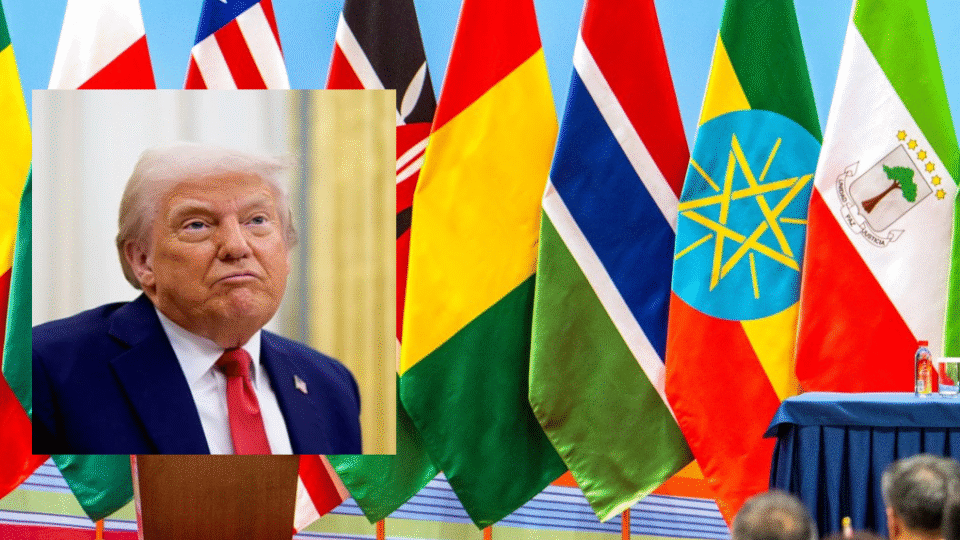
AGOA on the Brink: Extension Hopes Emerge Amid Expiration Deadline
As the clock strikes midnight on September 30, 2025, the African Growth and Opportunity Act (AGOA), a pivotal trade agreement between the United States and 35 sub-Saharan African nations, officially expires, ending 25 years of duty-free access to the US market for nearly 7,000 products. Yet, in a dramatic last-minute twist, the Trump administration has signaled support for a one-year extension, offering a potential lifeline to African economies teetering on the edge. While African governments, including Kenya, intensify lobbying efforts, the future of US-Africa trade hangs in the balance, prompting calls for diversification and new bilateral deals.
Enacted in 2000 under President Bill Clinton, AGOA sought to deepen economic ties between Africa and the US by granting duty-free entry for goods ranging from textiles and agriculture to raw materials like platinum, gold, diamonds, and rare earths. The pact fueled development in key sectors, particularly textiles in Lesotho and Madagascar, agriculture in South Africa, and vanilla production in Madagascar, creating thousands of jobs across the continent. In Kenya alone, AGOA sustains over 66,000 direct jobs, bolstering exports and supporting social development.
Studies highlight AGOA's positive ripple effects, such as increased US-bound exports in the textile industry. However, its overall impact remains mixed. Benefits vary widely by country and sector, with bureaucratic hurdles and slim profit margins often diminishing returns. By 2017, just 8.5 percent of exports from AGOA-eligible nations reached the US, dwarfed by flows to Europe and China. For many, the administrative burdens of US trade outweighed the perks, leading some to question the deal's long-term value.
Without renewal, the fallout could be swift and severe. South Africa, Africa's top exporter to the US, risks over 35,000 job losses in its citrus sector alone. Madagascar faces a 47 percent tariff on vanilla and textiles, while Lesotho, a jeans manufacturing hub, contends with rates up to 15 percent after a recent reduction from 50 percent. Botswana and Chad could see two percent drops in total exports, Lesotho nearly six percent, and Madagascar over three percent. Critical mineral exports from nations like Ghana, Namibia, South Africa, and others will also incur new duties, hampering revenue streams.
The Trump administration's protectionist "America First" policies, reinstated since January 2025, have exacerbated tensions with unilateral tariffs of 10 to 30 percent on African goods, including a 10 percent levy on Kenya. International trade specialists warn that African firms will struggle to compete in the US market, triggering production declines and widespread unemployment. In 2024, AGOA-facilitated African exports to the US totaled $8 billion, with South Africa comprising nearly half, underscoring the scale of potential disruption.
Amid the uncertainty, a Reuters report reveals that a senior White House official confirmed President Trump's backing for a one-year extension, a shift from his post-inauguration silence on the pact. This comes despite slim odds for a full renewal before expiry, as noted by Bloomberg, strained by the administration's tariff regime. African leaders and investors have ramped up lobbying for a short-term bridge, following failed bids for multi-year deals in Congress.
Kenya stands at the forefront of these efforts. On September 24, 2025, the National Assembly unanimously passed a motion sponsored by MP Jane Kagiri, urging swift AGOA extension for its vital role in Kenya's economy. President William Ruto, speaking during his US visit on the sidelines of the United Nations General Assembly in New York on September 25, doubled down on the advocacy. He revealed plans to ink a groundbreaking bilateral trade agreement with the US by year's end, the first under Trump with any African nation, serving as a buffer against AGOA's void.
Ruto pressed for more, stating his intent to seek at least a five-year renewal. "I will be asking him for the US to consider seriously renewing and extending AGOA for at least a minimum of five years, because it is a platform that connects Africa and the US in a very fundamental way, and it can go a long way in solving some of the trade deficits and challenges that exist at the moment," he told reporters. This dual strategy reflects broader African maneuvers, with Zimbabwe easing its own barriers, and South Africa and Madagascar pursuing targeted exemptions.
Economists view AGOA's potential end, even if temporarily staved off, as a catalyst for change. One Malian expert frames it as a break from US-centric "gifts" that prioritized American interests, advocating a pivot to economic sovereignty. A researcher from the German Institute of Development and Sustainability concurs, arguing that AGOA's fading appeal signals Africa's need to broaden trade networks. For reliant nations, the extension buys time, but the consensus grows: dependency must yield to self-reliance.
The African Continental Free Trade Area (AfCFTA), operational since 2021 across 54 nations and 1.5 billion people, emerges as a cornerstone for intra-African commerce, potentially outshining AGOA's benefits. Trade specialists predict it will draw businesses inward, fostering resilience. Meanwhile, global shifts redefine partnerships. China's tariff-free access for 33 African countries propelled bilateral trade to $295 billion in 2024, up 4.8 percent. The European Union's Economic Partnership Agreement endures as a mainstay, while India, Turkey, Brazil, and Russia vie for influence.
A Washington-based governance consultant cautions against leaping from one dependency to another, stressing negotiations that prioritize local value addition for true growth. As Kenya's bilateral push illustrates, targeted deals could complement broader diversification.
AGOA's expiration, now possibly deferred by a year, crystallizes a pivotal moment. The pact delivered tangible wins but fell short of transformative promise, hampered by uneven gains and rising protectionism. For countries like Kenya, the extension and forthcoming bilateral pacts offer breathing room to cushion blows from tariffs and job threats. Yet, the horizon demands bolder steps: amplifying AfCFTA, courting diverse partners, and building autonomous economies.
Africa's trade with the US, once a beacon, now represents just a slice of the continent's potential. With strategic lobbying yielding short-term victories and long-term visions taking shape, the coming months will test whether this juncture sparks renewal or reinvention. As global dynamics shift, Africa's economic sovereignty hangs not on Washington's whims, but on the continent's resolve to seize new opportunities