

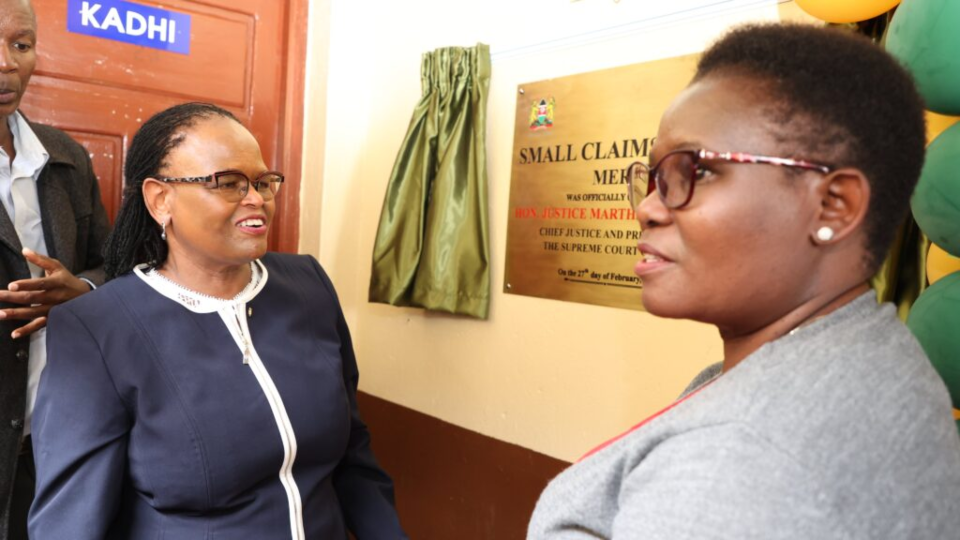
Lawyer Sues Chief Justice Koome Over Delayed Rollout of Small Claims Courts
A Nairobi-based lawyer has filed a petition in the High Court to compel Chief Justice Martha Koome to expedite the establishment of Small Claims Courts across Kenya, alleging that she has failed to fulfill her statutory obligations under the Small Claims Court Act of 2016. The petitioner, Sunday Memba, claims that the Judiciary's slow progress in setting up these courts has denied citizens their constitutional right to accessible justice.
According to the petition, the Judiciary has operationalized only 39 Small Claims Courts out of the 337 mandated by law, covering just 11.5 percent of the required total. This leaves 298 sub-counties without access to these specialized courts, which are designed to handle claims below Sh1 million. Memba argues that the current pace of establishing approximately four courts per year would delay full compliance until 2097, a timeline he deems unacceptable.
Memba further criticizes the Chief Justice for gazetting Small Claims Courts at the county level rather than the sub-county level, as required by Section 11 of the Act. He contends that this decision undermines equal access to justice by creating larger and uneven territorial jurisdictions. For instance, while areas like Naivasha have dedicated courts, others, such as Machakos and Makueni, share a single facility, leading to disparities in access.
The lawyer is seeking several remedies from the High Court. He urges the court to declare that Chief Justice Koome has violated her constitutional and statutory duties by failing to establish the required courts. Additionally, he requests an order compelling her to set up Small Claims Courts in all sub-counties within six months. Memba also calls for the appointment of qualified part-time adjudicators, as provided under Section 6(6) of the Act, to accelerate the rollout and ensure efficient delivery of justice.
Furthermore, the petitioner seeks a court directive for the Chief Justice to publish a detailed national rollout plan in the Kenya Gazette and on the Judiciary's platforms, outlining clear timelines for full implementation.
The case comes amid significant challenges for the Judiciary, including a budget cut of over Sh3 billion in the last financial year, which has strained its resources. Despite these financial constraints, Memba argues that the Chief Justice has sufficient administrative tools and authority to meet the legal requirements, particularly through the appointment of part-time adjudicators to ensure cost-effective and efficient justice delivery.
The outcome of this petition could have far-reaching implications for the Judiciary's efforts to enhance access to justice for Kenyans, particularly for those with smaller claims seeking affordable and timely dispute resolution.