

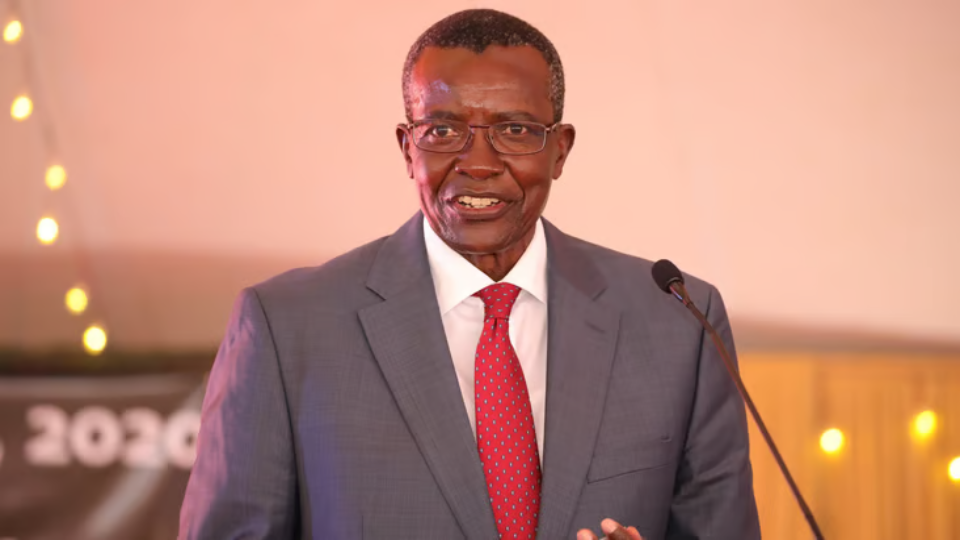
Former Chief Justice Maraga Condemns Privatisation Bill, Demands Transparency and Public Oversight
Nairobi, October 14, 2025 - Former Chief Justice and presidential aspirant David Maraga has issued a scathing critique of the recently passed Privatisation Bill 2025, labeling it a "sinister economic cold war" that threatens Kenya's strategic public assets. In a detailed statement released on Monday, Maraga warned that the legislation, which aims to privatize state-owned enterprises, undermines constitutional mandates for public participation and risks consolidating wealth among a select few.
The Privatisation Bill 2025, now awaiting President William Ruto's assent, has sparked significant controversy due to its potential to reshape control over Kenya's critical national assets. Maraga urged citizens not to view the legislation as a routine administrative measure, emphasizing that it could fundamentally alter who controls these assets, how they are valued, and who benefits from their future revenue streams.
Maraga stressed that the Constitution mandates transparency and public involvement in decisions impacting the public, describing these requirements as non-negotiable. He called for comprehensive measures to ensure accountability, including the publication of full lists of all entities slated for privatization or sale, accompanied by independent valuations, debt profiles, and workforce impact assessments.
To safeguard public interest, Maraga demanded open public hearings in every region affected by the privatization process. These hearings, he insisted, should be documented with written records and published responses to public submissions. He further emphasized the need for strict enforcement of conflict-of-interest rules, requiring full disclosure of beneficial owners for any bidder or adviser involved in the process.
Maraga advocated for a competitive privatization process, featuring open tendering, audited information packs, and the publication of all post-award contracts. He also called for ongoing oversight by Parliament and the Auditor-General through detailed performance audits, as well as the inclusion of clawback clauses to address any underperformance or breaches in the privatization agreements.
For transactions involving critical national infrastructure, Maraga proposed citizen oversight through defined parliamentary thresholds or, where necessary, a referendum mechanism consistent with Kenyan law. These measures, he argued, are essential to protect the nation's assets from mismanagement or exploitation.
Drawing on historical examples, Maraga warned of the dire consequences of poorly regulated privatization efforts. He cited both international and Kenyan cases from the 1990s, where high-value public assets were sold at undervalued prices to politically connected individuals. These transactions, he noted, often led to economic collapse and disproportionately harmed ordinary citizens while enriching a small elite.
Maraga underscored that national assets belong to the Kenyan people and must be protected with the highest standards of legality, transparency, and accountability. He called for the publication of independent audits, valuation methodologies, and clear transaction timelines before any further steps are taken in the privatization process.
In his impassioned statement, Maraga emphasized that privatization cannot be considered progress if it disregards legal standards. He urged Kenyans to demand transparency and accountability to ensure that no jobs, public interests, or national patrimony are jeopardized without clear evidence of value for citizens. He vowed to continue mobilizing, monitoring, and, if necessary, litigating to enforce these standards and protect Kenya's assets from what he described as a ruling class that persistently violates the law.
Maraga's critique has reignited public debate over the Privatisation Bill 2025, raising critical questions about the future of Kenya's state-owned enterprises and the need for robust mechanisms to safeguard the nation's economic interests.