

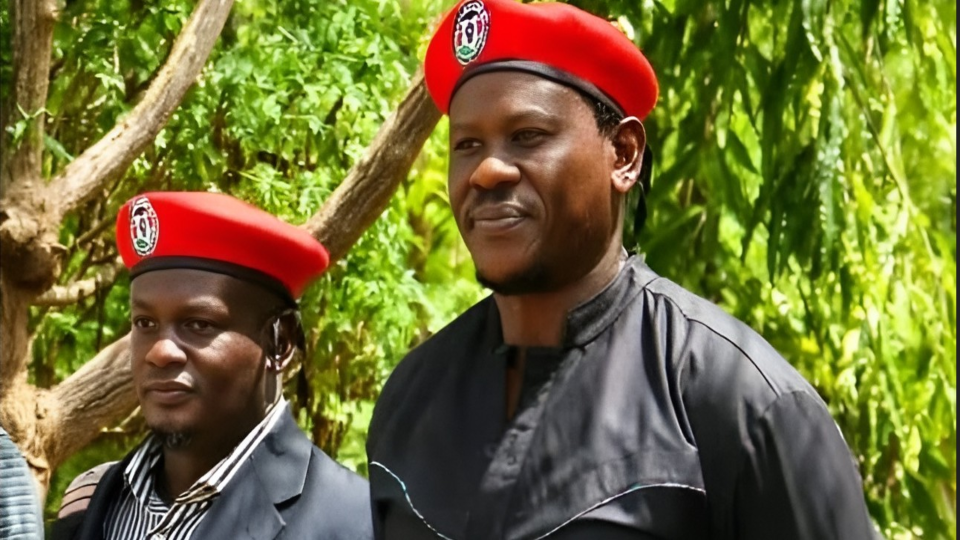
Urgent Call: Rights Groups Demand Release of Abducted Kenyan Activists Bob Njagi and Nick Oyoo from Ugandan Custody
Kampala/Nairobi - In a bold escalation of efforts to secure justice, Amnesty International Kenya, alongside the Law Society of Kenya and Vocal Africa, has formally petitioned Uganda's President Yoweri Museveni for the immediate release of two Kenyan human rights activists, Bob Njagi and Nick Oyoo. The duo vanished 20 days ago in a brazen abduction in Kampala, sparking outrage among civil society groups and highlighting deepening concerns over the safety of cross-border activists in East Africa.
The incident unfolded under the cover of broad daylight in Uganda's bustling capital, where eyewitnesses reported seeing the two men seized by individuals dressed in military uniforms. Since that harrowing moment, Njagi and Oyoo have been held incommunicado, their families plunged into a nightmare of uncertainty and grief. Credible intelligence points to their detention at the heavily fortified Mbuya Military Facility in Kampala, a site notorious for its opacity in handling high-profile cases. Every passing hour without word amplifies the anguish, as loved ones grapple with the fear that this could be an enforced disappearance designed to silence dissent.
Bob Njagi and Nick Oyoo stand as dedicated defenders of human rights, tireless in their advocacy for marginalized voices across the region. Known for their unwavering commitment to justice, they had traveled to Uganda to engage in activism efforts, though specifics of their activities at the time remain shrouded amid the chaos of their seizure. Their work, rooted in challenging systemic injustices, has now made them unwitting symbols of a larger struggle against the arbitrary targeting of those who dare to speak truth to power.
The petition, directed not only to President Museveni but also to Kenya's Attorney General for urgent legal guidance, lays out a series of uncompromising demands. At its core is the call for the activists' unconditional and immediate release, coupled with full disclosure of their current whereabouts to allow for family contact and legal representation. The groups insist on their safe return to Kenyan soil, an independent probe into the abduction's circumstances, and swift accountability for all perpetrators involved. This action underscores a broader imperative: upholding Kenya and Uganda's obligations under domestic laws and international human rights standards, particularly the freedoms of expression, association, and peaceful assembly that these activists embody.
Supporting the petition are harrowing eyewitness testimonies that paint a picture of state-orchestrated force. Activists from the Free Kenya Movement, including Florence Kanyua and Felix Wambua, have voiced blistering frustration over Uganda's stonewalling. Kanyua highlighted the glaring contradiction between official denials and on-the-ground reports, noting how the habeas corpus application filed in Uganda has ground to a halt despite a court order from Justice Simon Peter Kinobe demanding the men's appearance. Nearly three weeks on, no production has occurred, and the state's seven-day deadline to report their status has lapsed without consequence. Wambua decried this as a blatant evasion of justice, urging Africans continent-wide to amplify their voices against such impunity.
Amnesty International Kenya's Executive Director, Irungu Houghton, framed the ordeal as a textbook case of enforced disappearance, a grave violation that demands swift governmental intervention. He pressed the Kenyan authorities to extend full diplomatic leverage, ensuring Njagi and Oyoo receive consular access, legal counsel, and the right to communicate with their families. Houghton's words cut deep: the silence from Kampala, mirrored by Nairobi's perceived inaction, betrays a abdication of duty that endangers every activist treading these shared borders.
Ugandan officials have maintained a posture of feigned ignorance, asserting exhaustive searches have turned up empty despite mounting evidence to the contrary. The state now faces a pivotal court date on Wednesday, where it must justify its failure to comply with judicial directives and furnish a overdue report on the activists' fate. Yet, with trust eroded and timelines slipping, observers fear this will devolve into yet another exercise in bureaucratic delay.
This abduction is no isolated tragedy; it echoes a disturbing pattern of harassment against human rights defenders, fueling a regional campaign to eradicate such abductions once and for all. The petition has ignited a global online drive, inviting citizens everywhere to flood President Museveni's office with messages of solidarity and demands for resolution. From Nairobi's vibrant streets to Kampala's shadowed alleys, the cry is unified: enough is enough. The fates of Bob Njagi and Nick Oyoo hang in the balance, a stark reminder that the fight for freedom knows no borders, but neither does the peril it invites.
As the clock ticks toward Wednesday's hearing, all eyes remain fixed on Uganda's response. Will Museveni heed the chorus of international pressure, or will this become another scar on East Africa's human rights landscape? For now, the activists' supporters hold vigil, their resolve unbroken in the face of uncertainty.