

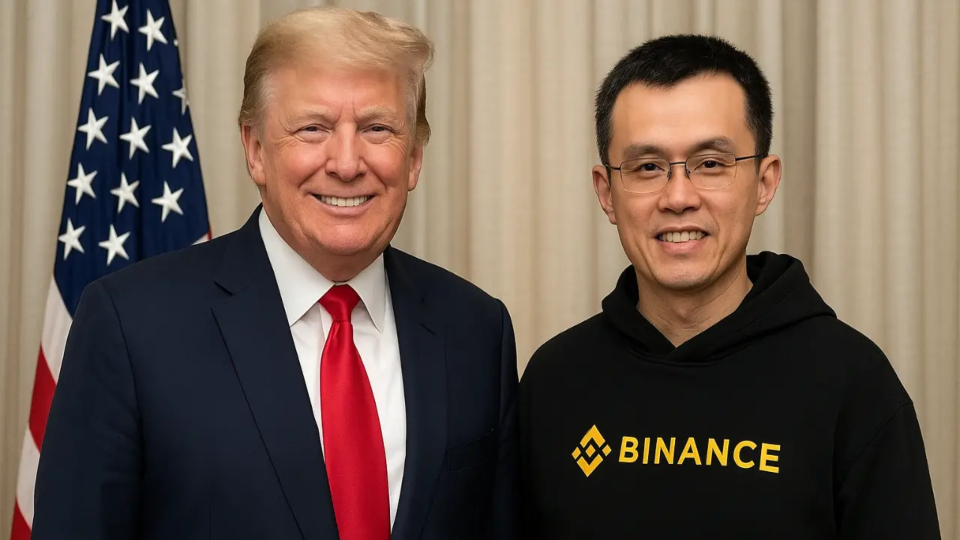
Trump Claims Ignorance of Crypto Billionaire He Pardoned Last Month
Washington, DC - In a striking revelation during a recent television interview, US President Donald Trump stated that he does not know who Changpeng Zhao is, even though he issued a presidential pardon to the cryptocurrency billionaire just last month. The comment has sparked widespread discussion about the circumstances surrounding the clemency and its broader implications for the administration's approach to digital assets.
The exchange occurred during a CBS News 60 Minutes interview aired on Sunday, where Trump faced questions about his decision to pardon Zhao, widely known in the industry as "CZ." When pressed on the matter, Trump responded bluntly, "Okay, are you ready? I don't know who he is." He further elaborated that he had no recollection of ever meeting Zhao and emphasized that he had "no idea who he is." According to Trump, his decision to grant the pardon stemmed solely from briefings indicating that Zhao had been unfairly targeted in what he described as a "witch hunt" orchestrated by the previous administration under former President Joe Biden.
This pardon, issued in October, effectively removes longstanding restrictions that barred Zhao from participating in financial ventures. Zhao, the co-founder and former chief executive of Binance, the world's largest cryptocurrency exchange by trading volume, had faced severe legal consequences prior to the clemency. In November 2023, he pleaded guilty to charges of enabling money laundering through the platform, a case that prosecutors argued inflicted "significant harm to US national security." As part of the plea deal, Zhao served a four-month prison sentence and was compelled to resign from his leadership role at Binance, stepping away from day-to-day operations.
White House Press Secretary Karoline Leavitt defended the pardon at the time, framing it as a corrective measure against what she called the Biden administration's "war on cryptocurrency." She described the prosecution as an "overly prosecuted case" that had undergone thorough review, adding that Trump sought to rectify this perceived overreach and "misjustice" by invoking his constitutional authority. Leavitt's remarks underscored the administration's broader pivot toward embracing digital currencies, positioning the pardon as part of an effort to foster innovation in the sector.
Yet, the timing and rationale of Trump's clemency have drawn sharp criticism from observers who point to potential conflicts of interest tied to his personal and familial financial stakes in the crypto world. Zhao's companies, including Binance, have forged partnerships with entities closely linked to the Trump family. Notably, Dominari Holdings, a firm based in Trump Tower where two of Trump's sons serve on the board of advisers, has collaborated with Zhao's ventures on emerging digital-currency initiatives. Earlier this year, in May, it was announced that a stablecoin developed by the Trump family's crypto firm, World Liberty Financial, would facilitate a $2 billion investment by an Abu Dhabi-based company into Binance.
These connections extend beyond Zhao. The Trump administration has taken similar actions in other high-profile crypto cases, including halting a fraud investigation against entrepreneur Justin Sun following his investments in World Liberty Financial. Trump has also extended pardons to the founders of the BitMEX cryptocurrency exchange, who were charged with money laundering violations, as well as to Ross Ulbricht, the creator of the infamous Silk Road dark web marketplace, long associated with facilitating illegal drug trades.
During the same 60 Minutes interview, Trump doubled down on his pro-cryptocurrency stance, warning that the United States must assert leadership in the industry to avoid ceding ground to competitors like China. "We have to make sure we're a leader, or China and others are going to take it away from us," he said, highlighting the strategic importance of digital assets in global economic competition.
The pardon leaves several questions unresolved, including whether it fully restores Zhao's eligibility with US regulators or alters his involvement in Binance's operations. For now, Binance continues to dominate the crypto trading landscape, serving millions of users worldwide. As the Trump administration pushes forward with its crypto-friendly agenda, this episode serves as a vivid illustration of the intersection between politics, personal business interests, and the rapidly evolving world of digital finance. Critics argue it raises ethical concerns about transparency, while supporters view it as a bold step toward deregulation and innovation.