

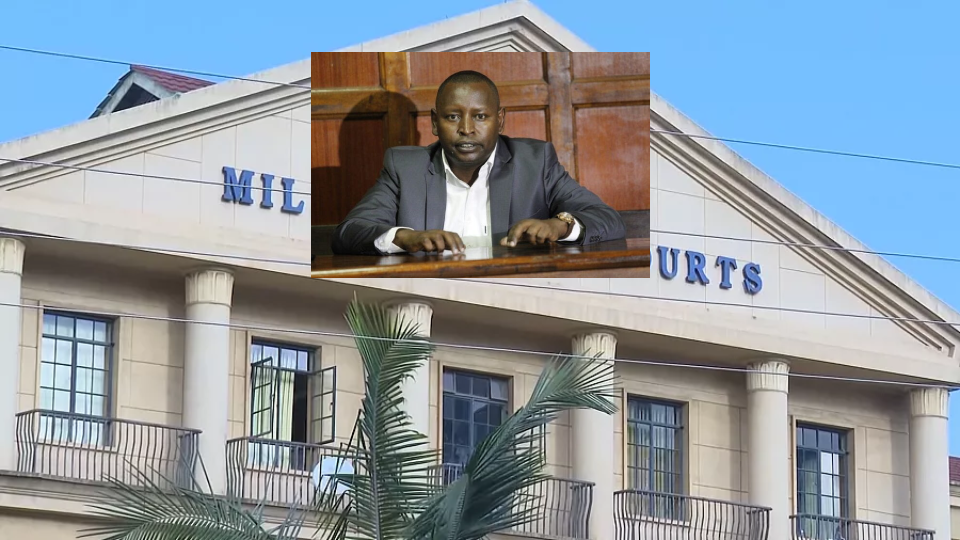
High Court Acquits Former Samburu Governor Moses Lenolkulal in Landmark Kshs. 84.5 Million Graft Case
The High Court has overturned the conviction of former Samburu County Governor Moses Lenolkulal, exonerating him from all charges in a high-profile corruption case involving Ksh84.5 million. This ruling not only frees Lenolkulal from his imprisonment but also clears two other key figures implicated in the matter, marking a major setback for anti-graft efforts in Kenya's devolved government.
The case dates back to Lenolkulal's tenure as governor, where he faced allegations of conflict of interest, corruption, and unlawful acquisition of property. Prosecutors claimed he received approximately Ksh83 million through fraudulent transactions linked to the procurement and supply of petroleum products to Samburu County. The deal allegedly involved undue payments to a company, with Lenolkulal accused of benefiting personally from the arrangement. Hesbon Ndathi was named as his proxy in the transactions, while former Samburu County Chief Officer Bernard Lesurmat was said to have facilitated the illicit payments to the supplier.
Lenolkulal's legal troubles began in earnest in 2019, when he appeared before the Milimani Anti-Corruption Court in Nairobi amid intense scrutiny. The proceedings unfolded over several years, culminating in a landmark conviction in August 2024. That decision by the Anti-Corruption Court made Lenolkulal the first sitting or former county governor to be found guilty in such a prominent graft scandal. The court sentenced him to prison and imposed a ten-year ban on holding any public office, underscoring the gravity of the findings at the time. The conviction highlighted systemic vulnerabilities in county procurement processes, particularly in remote regions like Samburu, where oversight can be challenging.
However, Lenolkulal's defense team mounted a vigorous appeal, arguing that the prosecution had failed to produce concrete evidence directly tying him to the fraudulent activities. They contended that the case relied on circumstantial links rather than irrefutable proof of wrongdoing, emphasizing that public officials must navigate complex interests without automatic presumption of guilt.
Delivering the High Court judgment recently, the bench agreed with the appellants. The judges ruled that while conflicts of interest are a serious concern for public servants, convictions demand robust, direct evidence of corruption, which was absent in this instance. The court found no sufficient linkage between Lenolkulal and the alleged Ksh84.5 million transactions, nor proof of the conflict of interest or unlawful property gains. In a sweeping decision, the High Court also acquitted Ndathi and Lesurmat, releasing all three men from the charges that had ensnared them.
This acquittal has immediate implications for Lenolkulal, who was released from jail following the ruling. It lifts the shadow of the ten-year public office ban, potentially reopening doors for his political ambitions in Samburu County or beyond. For Ndathi and Lesurmat, the decision restores their reputations and ends years of legal entanglement.
The outcome underscores ongoing tensions within Kenya's anti-corruption architecture. The Ethics and Anti-Corruption Commission (EACC), which spearheaded the initial probe, has long maintained that its investigations are thorough and airtight. Yet, the case exposes cracks in the system, particularly the Office of the Director of Public Prosecutions (ODPP)'s role. Since 2013, the ODPP has withdrawn 18 major graft cases from 15 counties, despite receiving comprehensive files from the EACC. This pattern has frustrated investigators and eroded public trust.
In a recent report to the Senate County Public Accounts Committee last September, the EACC lamented the ODPP's limited prosecutorial powers, arguing that such withdrawals hinder accountability, delay the recovery of looted funds, and squander investigative resources. The commission called for reforms to bolster coordination and ensure that solid cases reach full prosecution. Director of Public Prosecutions Renson Ingonga, who engaged with stakeholders just days ago on November 6, 2025, has yet to comment specifically on this ruling, but the broader critique points to a need for structural changes in how graft allegations are pursued.
Lenolkulal's case, once hailed as a victory against impunity in devolution, now serves as a cautionary tale about the burdens of proof in complex financial probes. As Samburu County continues to grapple with development challenges, including energy supply issues that fueled the original procurement scandal, the acquittal raises questions about justice, oversight, and the path forward for Kenya's fight against corruption. Stakeholders will watch closely to see if this prompts renewed calls for legislative tweaks or if it emboldens other officials facing similar scrutiny.