

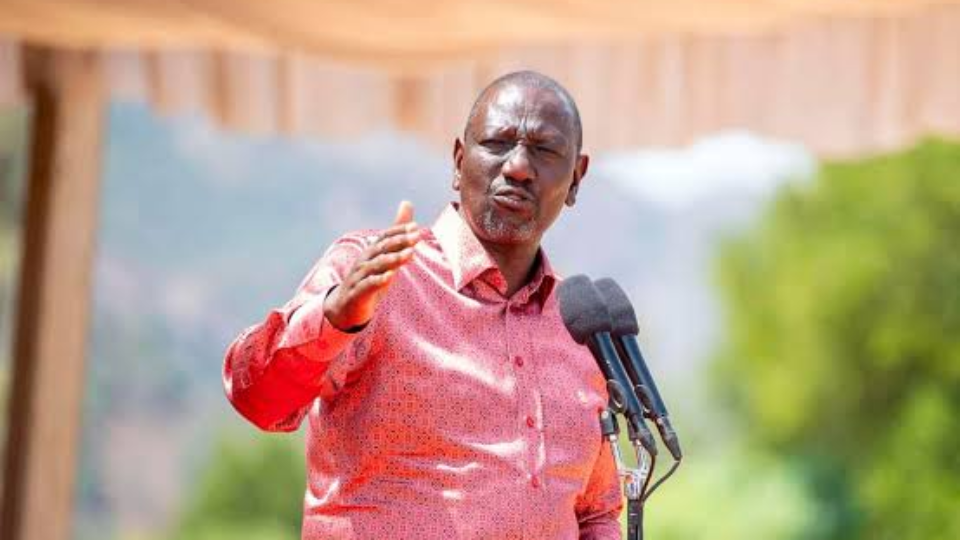
President Ruto Announces Tough New Measures Against Drug Trafficking, Including Death Penalty for Major Offenders
President William Ruto has revealed plans to introduce sweeping changes to the country's narcotics laws, proposing the death penalty by hanging for individuals convicted of trafficking hard drugs such as heroin and cocaine, as well as those involved in the sale of illicit alcohol.
The announcement came during a public engagement at a pre-wedding ceremony in Moiben Constituency, Uasin Gishu County, on January 3, 2026. President Ruto emphasized that current penalties are too lenient, allowing offenders to pay fines as low as KSh 1 million and continue their activities, which he said has failed to deter traffickers and has left families devastated.
Under the proposed legislation, which will be tabled in Parliament, the sale of hard drugs and illicit substances will be reclassified as capital offenses. The new law will eliminate the option of fines for these crimes and instead impose the maximum punishment. Additionally, the state will gain powers to confiscate assets, including vehicles and properties, acquired through proceeds from drug and illicit alcohol trade.
President Ruto highlighted the severe impact of drug abuse on Kenyan society, noting that an estimated five million citizens are affected, with over 4.7 million people aged 15 to 65 currently using at least one substance of abuse. He described the crisis as unsustainable, destroying families, fueling addiction among youth, and posing threats to national health, security, and economic productivity.
This proposal builds on recent government initiatives to combat substance abuse. In his New Year's Eve address from Eldoret State Lodge on December 31, 2025, President Ruto declared alcohol and drug abuse a national emergency and announced the establishment of a strengthened Anti-Narcotics Unit within the Directorate of Criminal Investigations. The unit will expand from 200 to 700 officers, equipped with advanced training, surveillance tools, intelligence capabilities, and forensic resources to target high-level traffickers, financiers, and organized networks.
The specialized unit will operate as a permanent multi-agency team, complementing the National Authority for the Campaign Against Alcohol and Drug Abuse, with a focus on asset tracing, seizure, and forfeiture. President Ruto also warned that any government officials or security officers found colluding with traffickers will face immediate prosecution and dismissal.
Interior Cabinet Secretary Kipchumba Murkomen echoed the president's resolve, declaring 2026 as the year to liberate Kenyan youth from substance abuse and confirming plans for intensified operations starting immediately.
Mombasa Governor Abdulswamad Shariff Nassir has publicly supported the death penalty proposal, describing the narcotics trade as a grave threat, particularly in coastal regions, and called for additional measures such as reclassifying muguka as a harmful drug.
The proposed changes represent a significant escalation in Kenya's anti-narcotics strategy, aiming to dismantle criminal networks through harsher deterrents and enhanced law enforcement capabilities. Parliament will need to approve the amendments for them to take effect.