

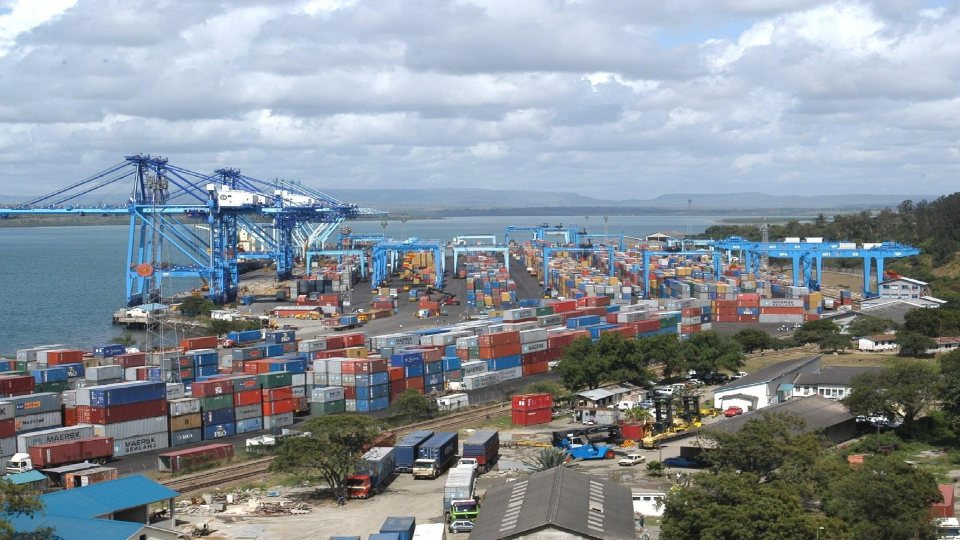
Bitter Rivalry Between Mombasa Tycoon Families Escalates Over Port Tenders and Defamation Claims
A long-standing business rivalry between two influential Mombasa families has intensified into multiple high-stakes court battles involving lucrative port tenders and serious allegations of defamation.
At the center of the dispute is control over grain handling operations at the Port of Mombasa. For more than three decades, businessman Mohammed Jaffer has maintained dominant influence through his MJ Group and Grain Bulk Handlers Limited (GBHL), which holds an 80 percent stake owned by Jaffer and managed by his son Mujtaba. Since 2000, GBHL has operated under a Kenya Ports Authority (KPA) license for berths three and four, handling bulk imports of wheat, rice, maize, and other cereals destined for Kenya, Uganda, South Sudan, Rwanda, the Democratic Republic of Congo, and World Food Programme aid distributions. The initial eight-year license expired in February 2008, but operations continued exclusively, generating substantial revenues amid rising import volumes that saw wheat shipments quadruple in recent years.
Complaints about clearance delays and high storage charges prompted KPA to seek greater competition. In 2022, the authority awarded a Sh5.9 billion contract to companies linked to the Joho family, including Portside Freight Terminals Limited, Portside CFS Limited, and Heartland Terminals, for constructing a second grain-handling facility. The tender followed the Specially Permitted Procurement Procedure (SPPP), approved by KPA's board to enhance food security and comply with competition laws.
This decision sparked immediate legal challenges from the Dock Workers Union and activist Senator Okiya Omtatah, who argued the process lacked transparency and competitiveness. The High Court initially quashed the award, ruling it failed to meet required thresholds. However, the Court of Appeal overturned this, reinstating the deal. In a significant recent development, the Supreme Court reversed the appellate ruling, declaring the procurement unconstitutional for violating principles of fairness, transparency, and competitiveness under Article 227 of the Constitution. This final decision preserves the existing structure at the port while setting a precedent for stricter adherence to public tender rules.
The commercial tensions have spilled into personal reputational disputes. Abubakar Yusuf Joho, brother of Mining Cabinet Secretary Hassan Joho, has pursued defamation proceedings against Matilda Kinzani, a long-time personal assistant associated with GBHL. The case stems from content circulated on social media and WhatsApp groups during mid-2024 nationwide protests, containing allegations of drug trafficking involvement, lacing imported rice with narcotics, theft of public funds during Hassan Joho's governorship of Mombasa County amounting to Sh40 billion, and improper acquisition of land by family-linked companies. Abubakar Joho testified that such claims severely damaged his reputation, with investigations tracing the material to Kinzani. Defense arguments have raised questions over evidence authenticity, including suggestions of artificial intelligence generation in forensic reports. The criminal defamation case proceeds at the Mombasa Magistrate's Court, alongside related civil matters.
Abubakar Joho has described the rivalry as normal business competition, noting proximity in port operations and shared sectors like rail services and cargo handling. However, the entry into grain handling appears to have heightened frictions.
Broader port dynamics reflect increasing challenges to established positions. In a separate development, Tanzanian billionaire Rostam Abdulrasul Aziz received High Court clearance in late 2025 for a Sh16 billion liquefied petroleum gas (LPG) terminal at Dongo Kundu through Taifa Gas, potentially introducing competition in a sector previously dominated by similar interests.
These intertwined legal battles highlight the high economic stakes at Kenya's primary maritime gateway, where infrastructure concessions influence regional trade flows and billions in annual throughput. The outcomes continue to shape competition, procurement standards, and personal reputations among the coastal city's prominent business figures.