

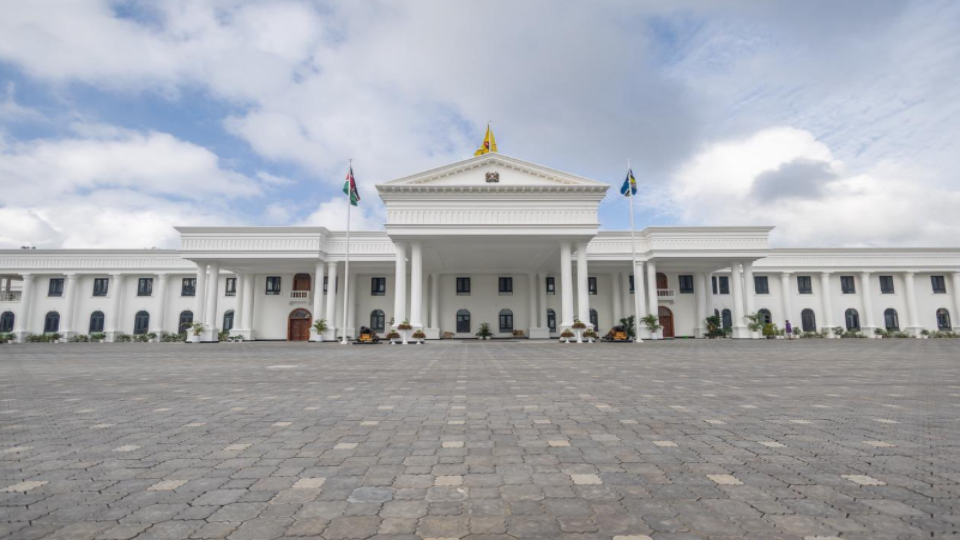
State House Budget Nearly Doubles to Sh16.9 Billion, Sparking Concerns Over Spending Priorities
The budget allocation for State House in the 2025/26 financial year has surged to approximately Sh16.9 billion following recent supplementary estimates, nearly doubling the original amount of Sh8.6 billion approved by the National Assembly in June 2025.
This significant increase, amounting to an additional Sh8.4 billion, has covered expanded operations at State Lodges nationwide, administrative services linked to the presidency, and statutory benefits for retired presidents and deputy presidents. The revised figure stands at around Sh16.998 billion in some reports, reflecting higher expenditures in areas such as travel, hospitality, vehicle purchases, fuel, and maintenance.
The sharp rise has triggered widespread debate among economists, fiscal analysts, and the public about government spending priorities, especially given ongoing economic challenges including high public debt, revenue constraints, and pressing needs in other sectors.
Comparisons have emerged with presidential budgets in other countries. For instance, Nigeria allocates about Sh3.1 billion to its presidency despite a population of roughly 220 million, while Kenya's Sh16.9 billion supports operations for a population of nearly 60 million. Some online discussions have claimed Kenya's allocation exceeds that of the White House, though experts caution that such direct comparisons can be misleading. In systems like the United States, presidential costs are distributed across multiple agencies, including security provided by the Secret Service and aircraft operations handled by the Department of Defense.
Economist Rufas Kamau highlighted these structural differences but stressed the need to evaluate whether the Sh16.9 billion delivers value for Kenyan taxpayers. He pointed to broader issues such as rising medical insurance premiums with diminishing returns and the strain on national revenues amid competing demands.
Samuel Nyandemo, a senior lecturer in economics at the University of Nairobi, expressed stronger concerns. He argued that the figures may understate actual spending due to limited transparency and oversight. Nyandemo described the overutilization of funds as living beyond approved means, potentially constituting an illegality. He questioned priorities at a time when northeastern Kenya faces drought, education systems lack sufficient books, chairs, and teachers, and hospitals struggle to provide even basic meals to patients.
Nyandemo called for greater fiscal discipline, including sticking to approved budgets, reducing wastage, and considering outsourcing of non-core functions like hospitality to specialized entities under strict procurement rules. He emphasized that high spending alone does not drive economic growth or improve public service delivery.
The increase comes against a backdrop where President William Ruto previously urged Kenyans to embrace austerity. In his first State of the Nation Address, he acknowledged that the country had lived beyond its means, accumulating avoidable debt through wasteful expenditure and counterproductive subsidies, and stressed the need to retire such practices.
This development adds to ongoing discussions about accountability in public spending, transparency in budgeting, and aligning resources with national development needs in education, healthcare, and social services amid fiscal pressures.