

African Union Rejects Unconstitutional Change in Madagascar Amid Escalating Crisis
The African Union (AU) has strongly condemned any attempt to unconstitutionally change the government in Madagascar, expressing grave concern over the intensifying protests and violence gripping the nation. This statement was issued following the AU's Peace and Security Council (PSC) 1305th meeting held on October 13, 2025, in response to the deepening political crisis in the Indian Ocean island nation.
In its communiqué, the AU urged all Malagasy stakeholders, including civilian and military actors, to exercise restraint and prioritize peaceful, consensual solutions to resolve the crisis. The PSC specifically called on the Malagasy army to uphold its constitutional mandate and refrain from interfering in political affairs. Additionally, it pressed the government to address the root causes of the instability through an inclusive national dialogue, emphasizing the need to tackle structural issues that have fueled public discontent.
To support efforts toward restoring peace and constitutional order, the PSC directed the AU Commission to take immediate action. This includes appointing a Special Envoy on Madagascar to facilitate dialogue and coordinate with regional bodies. The AU also plans to strengthen its Liaison Office in Antananarivo to enhance its presence and engagement in the country. Furthermore, the AU intends to work closely with the Southern African Development Community (SADC) and the Indian Ocean Commission to align efforts in de-escalating the crisis and promoting stability.
The AU's statement comes amid reports that President Andry Rajoelina left Madagascar on October 12, 2025, aboard a French military aircraft, as protests and a growing military mutiny threatened his leadership. The evacuation reportedly followed an agreement with French President Emmanuel Macron, though French authorities have clarified that they are not intervening militarily in the crisis.
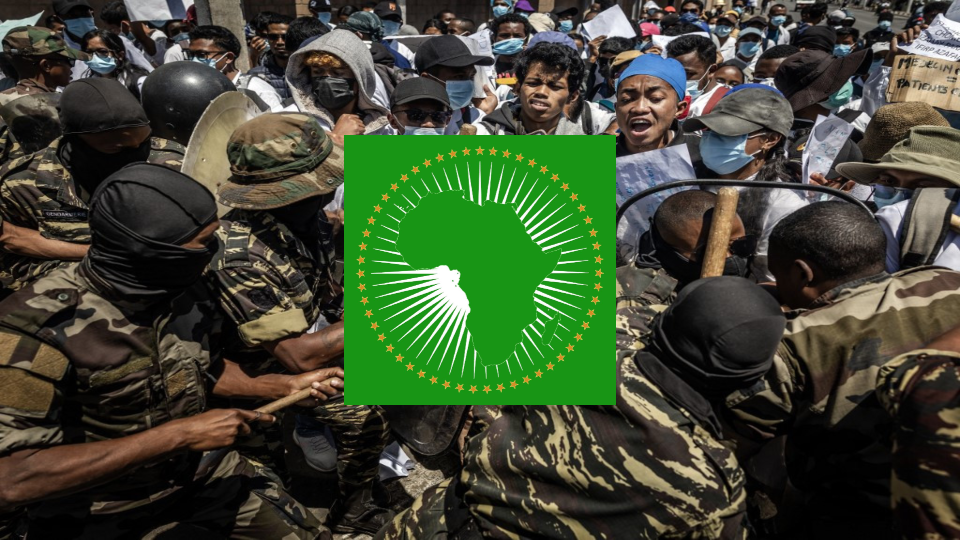
The unrest in Madagascar began on September 25, 2025, initially sparked by widespread water and electricity shortages. These grievances have since evolved into a broader nationwide movement demanding Rajoelina's resignation. The situation has deteriorated further, with security forces using force to disperse demonstrations. Meanwhile, sections of the paramilitary gendarmerie have reportedly sided with protesters, taking control of certain units, which has added to the volatility of the situation.
The AU's firm stance underscores its commitment to upholding constitutional governance and fostering peace in Madagascar. As the crisis continues, the international community, including regional organizations, remains focused on supporting dialogue and preventing further escalation of violence.