

Cameroon’s Historic Presidential Race: A Woman Challenges a 43-Year Rule
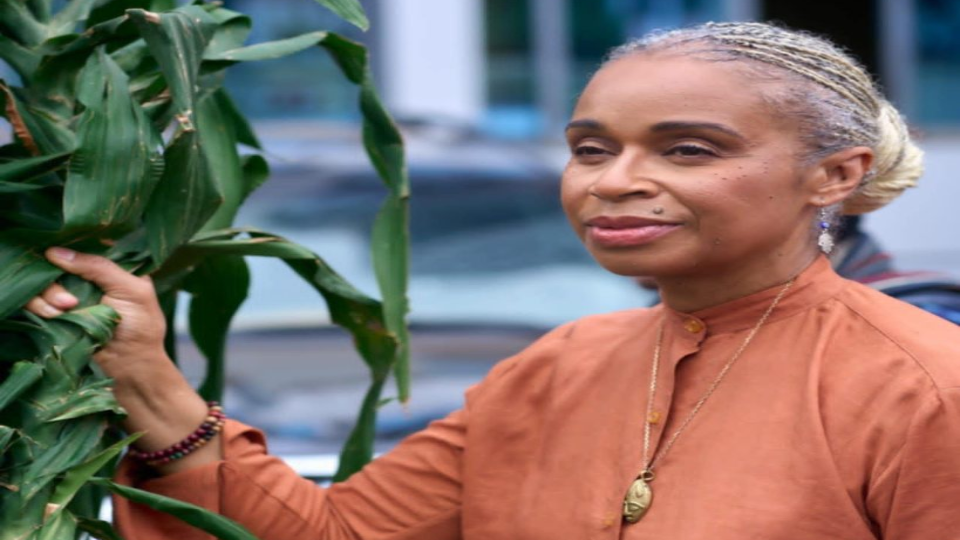
In a groundbreaking moment for Cameroon's political landscape, Tomaino Hermine Patricia Ndam Njoya has emerged as the sole female candidate among 12 contenders in the October 12, 2025, presidential election. Her candidacy marks only the third time a woman has vied for the nation's highest office, following Kah Walla and Esther Dang in 2011. Despite the odds, Ndam Njoya's campaign is gaining momentum, fueled by her ambitious vision, widespread support, and a growing wave of female political influence across Africa.
The announcement of the 12 candidates by Cameroon's electoral commission stunned many, as the initial pool included over 80 aspirants. Ndam Njoya's inclusion is a testament to her resilience and prominence in a male-dominated political arena. At 56, she is no stranger to leadership, serving as the mayor of Foumban and chairwoman of the Democratic Union for Cameroon (UDC). Her campaign slogan, "Freedom. Justice. Progress," reflects her call for a new era in a country she describes as weakened by decades of chaotic governance.
Cameroon, a Central African nation where women constitute over half the population, has seen gradual progress toward gender equality in politics. The adoption of the first Women's Convention in 2021 empowered over 81 women's organizations, amplifying their influence in ways unimaginable in previous elections. This shift has bolstered Ndam Njoya's campaign, offering hope for a potential female president in a country where such a milestone remains rare.
Ndam Njoya's political journey is deeply rooted in her family's legacy. She inherited the UDC leadership in 2021 from her late husband, Adamou Ndam Njoya, a prominent opposition figure who served as Cameroon's Minister of Education in the 1970s and ran for president in 1992, 2004, and 2011, losing each time to incumbent President Paul Biya. Now 92, Biya is seeking an eighth term after 43 years in power, making Ndam Njoya's challenge both symbolic and audacious.
Undeterred by skeptics, Ndam Njoya is campaigning tirelessly, leveraging social media platforms like Instagram, Facebook, and TikTok to reach voters. She has faced derogatory remarks from male competitors who label her "the wife of her late husband," but she remains focused on her message of unity and reform. Her vision includes resolving the Anglophone crisis in Cameroon's Northwest and Southwest regions, ongoing since 2016, and addressing the Islamist insurgency in the north. She also aims to tackle youth unemployment, improve investment conditions, and establish Cameroon as a federal state, fulfilling her husband's long-standing goals.
Ndam Njoya's campaign extends beyond Cameroon's borders. She has actively engaged the Cameroonian diaspora in Germany, Italy, and France, urging them to support her bid. In Germany, where the diaspora largely backs Biya's CPDM party, she met with notable figures like Joy Alemazung, the Cameroonian-born mayor of Heubach, and Steven Kommogne, a Cameroonian-born SPD member of parliament. In September 2025, she spoke at the World Brotherhood's annual meeting in Rome, attended by Pope Leo, advocating for peace and solidarity. She also visited Gabon to propose stronger neighborly relations amid Cameroon's conflicts.
Her international presence is complemented by her domestic credentials. As a former member of parliament, Ndam Njoya was part of the Forum of Women in Africa and Spain for a Better World and the African Parliamentary Union. Her decision to focus on Cameroon's future rather than pursue an international career has earned her respect among opposition leaders.
In a significant boost to her campaign, a dozen former presidential candidates who withdrew in July 2025 have endorsed Ndam Njoya. Among them is Shewa David Damuel, an entrepreneur and former Social Democratic Party member, who stressed the need for a united opposition. "Cameroon is at a crossroads. The opposition is divided; it is weak, so we must stand behind Ndam Njoya," he said. This support underscores her growing influence and the potential for a unified front against Biya's long-standing rule.
Ndam Njoya's platform extends beyond politics. She advocates for a rotation principle in the restitution of Cameroonian cultural assets looted during colonial times, ensuring they remain accessible to global audiences, including in German museums. Unlike the sultan of the Bamoun kingdom, who seeks to repatriate the Foumban throne from Berlin, Ndam Njoya believes these artifacts should be shared as part of the people's heritage.
Her candidacy has sparked hope that Cameroon could join African nations like Tanzania, Liberia, Malawi, and Namibia, which have embraced female leadership. With her focus on unity, economic growth, and cultural preservation, Ndam Njoya is positioning herself as a transformative figure in a nation yearning for change.
As election day approaches, Ndam Njoya's campaign is a beacon of progress in Cameroon's evolving political landscape. Whether she can unseat a 43-year incumbent remains uncertain, but her determination and vision have already made history.