

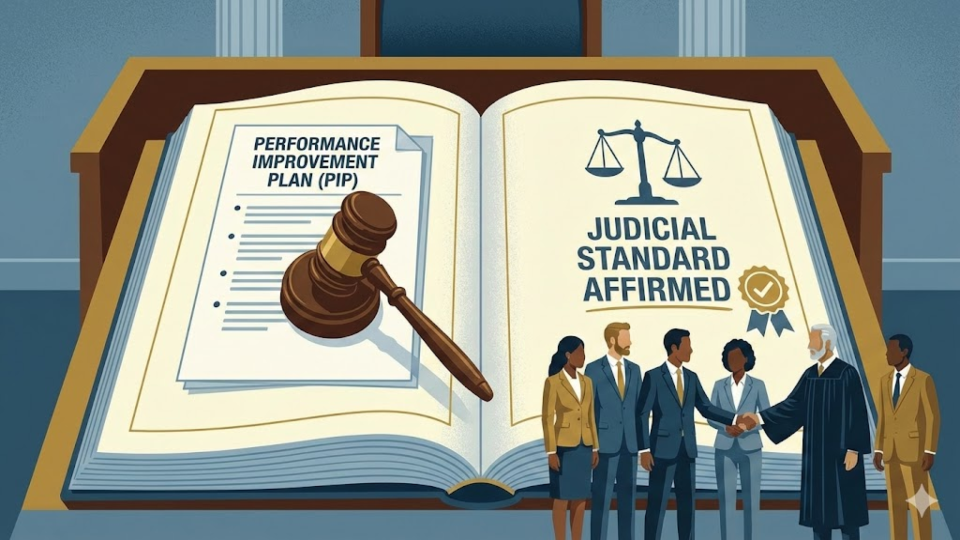
Commentary on the Affirmation of Performance Improvement Plans (PIPs) as a Judicial Standard in Kenyan Employment Law: Insights from Churchil Winstones Ochieng v I & M Bank Limited [2025] KEELRC 3338 (KLR)
Introduction
In the landmark judgment of Churchil Winstones Ochieng v I & M Bank Limited [2025] KEELRC 3338 (KLR), delivered on November 27, 2025, by Justice C.N. Baari of the Employment and Labour Relations Court (ELRC) in Nairobi, the court made a significant pronouncement on the role of Performance Improvement Plans (PIPs) in terminations based on poor performance. The excerpt highlights the court's affirmation that "Failure to place an employee on a PIP now renders termination unfair," emphasizing that while PIPs are not the sole mechanism for addressing underperformance, they have evolved into a "judicial standard" for validating such claims. This ruling underscores a growing judicial emphasis on procedural fairness and substantive justification in employment terminations under Kenyan law, particularly in probationary contracts. The takeaway—that employers must demonstrate tangible support for improvement before termination—serves as a cautionary note for human resource practices, reinforcing the principles of fair labour under Article 41 of the Kenyan Constitution and the Employment Act, 2007.
This commentary dissects the court's reasoning, contextualizes it within Kenyan employment jurisprudence, explores its implications for employers and employees, and evaluates its broader impact on workplace dynamics. By examining the facts, legal analysis, and precedents cited in the case, it becomes evident that this decision marks a pivotal shift toward more rigorous evidentiary requirements in performance-based dismissals.
Case Background and Factual Context
The claimant, Churchil Winstones Ochieng, was employed by I & M Bank Limited as an Assistant Manager in Personal and Business Banking on August 15, 2022, with a six-month probationary period initially ending on February 14, 2023. His gross monthly salary was Kshs. 900,000, and the contract allowed for probation extension by mutual agreement. Complaints about his leadership style, including allegations of victimization, harassment, and tribal discrimination, surfaced early in his tenure. These were channeled through anonymous whistleblower reports managed by Deloitte, leading to internal investigations, coaching sessions, and a disciplinary hearing.
The respondent extended the probation to August 14, 2023, citing ongoing issues. On August 11, 2023, Ochieng received a show-cause notice for poor performance and misconduct, with a response due by August 15. However, his contract was terminated on August 14 via email, labeled as "Termination of Probation." Ochieng sued, alleging unfair termination, discrimination, and violations of constitutional rights, seeking remedies including house allowance, gratuity, notice pay, overtime, leave, and damages.
The court found the termination procedurally unfair due to the premature dismissal before Ochieng could fully respond or attend a hearing, violating principles of natural justice and Section 41 of the Employment Act (which mandates explanation, hearing, and representation). Substantively, while whistleblower complaints justified termination on misconduct grounds, the poor performance allegation failed scrutiny. Critically, the court noted no evidence of a PIP or structured support for improvement, leading to the dismissal of performance as a valid ground (paragraphs 64-68 of the judgment).
Court's Reasoning on PIPs and Poor Performance
The court's analysis hinges on Section 43(2) of the Employment Act, which requires employers to prove that termination reasons were genuinely believed to exist at the time and were the cause of dismissal. In evaluating poor performance, Justice Baari acknowledged that PIPs are "not the only way to improve performance where the same is rated as unsatisfactory" (paragraph 66). However, the judge elevated PIPs to a "judicial standard," stating that their absence "now renders termination unfair" in such cases. This is because a PIP provides documented evidence of:
- Clear performance expectations and targets.
- Opportunities for feedback, training, and mentoring.
- A timeline for improvement, allowing the employee a "fair opportunity to improve" (paragraph 67).
In this case, the respondent's witness (RW3, the claimant's supervisor) testified that 27 branches under Ochieng's oversight underperformed, and discussions were held, but no formal PIP was implemented. The court dismissed this as insufficient, noting that "nothing suggests that the Claimant was placed on a performance improvement plan" (paragraph 65). This evidentiary gap weakened the employer's claim, as unsubstantiated allegations of poor performance could not meet the threshold of validity and justifiability under Section 43.
The ruling aligns with the court's broader finding that the termination was substantively fair on misconduct grounds (whistleblower complaints were "numerous and varied" and affected productivity, per paragraph 71), but the hybrid justification (performance plus misconduct) diluted the employer's defense. By bifurcating the grounds, the court highlighted how employers risk unfair termination findings if they conflate issues without tailored processes.
Legal Context and Precedents
This affirmation of PIPs as a judicial standard builds on evolving Kenyan jurisprudence emphasizing fairness in probationary terminations. The court referenced Monica Munira Kibuchi and 6 Others v Mount Kenya University [2016] eKLR (paragraph 54), where the ELRC declared Section 42(1) of the Employment Act unconstitutional to the extent it excludes probationary employees from Section 41's procedural safeguards (right to a hearing). The Court of Appeal in Aga Khan Hospital Kisumu v Erick Wanjohi [2020] eKLR (paragraph 51) further affirmed that probation can be extended up to 12 months with agreement, but fairness applies throughout.
On performance specifically, the decision echoes Cooperative Bank of Kenya Limited v Banking Insurance & Finance Union [2017] eKLR (paragraph 70), which stresses that courts must scrutinize the "validity and justifiability" of termination reasons. Kenyan courts have increasingly mandated PIPs in performance cases, as seen in Jane Sampor v Ol Pejeta Ranching Limited [2016] eKLR and Banking, Insurance & Finance Union (Kenya) v Kenya Commercial Bank Limited [2013] eKLR, where absences of structured improvement plans led to unfair dismissal findings. These precedents reflect a judicial trend toward importing common-law principles of natural justice into statutory frameworks, ensuring terminations are not arbitrary.
Comparatively, this mirrors international standards, such as those under the International Labour Organization (ILO) Convention No. 158 (Termination of Employment), which Kenya has ratified. Article 4 requires "valid reason" for termination, and Article 7 mandates an opportunity to defend. In jurisdictions like the UK (under the Employment Rights Act 1996) or South Africa (Labour Relations Act 1995), PIPs are similarly viewed as essential for substantiating capability dismissals, with failure often resulting in unfair dismissal awards.
The court's caveat—that PIPs are not the only mechanism—leaves room for alternatives like verbal warnings, training programs, or documented feedback sessions. However, in practice, the "judicial standard" language suggests PIPs are now the benchmark, shifting the burden to employers to prove equivalent support.
Implications for Employers and Employees
For employers in Kenya, this ruling imposes a heightened duty to document performance management. Before invoking poor performance:
- Implement formal PIPs with measurable goals, timelines (e.g., 30-90 days), and regular reviews.
- Ensure probation extensions are explicitly agreed upon and documented to avoid implied confirmation claims.
- Separate performance from misconduct processes to avoid procedural conflation.
- Train HR on whistleblower handling, as anonymous complaints can substantiate misconduct but require independent verification.
Failure to do so risks compensation awards (here, two months' salary at Kshs. 1,800,000, plus notice and leave pay), reputational damage, and increased litigation. Small and medium enterprises (SMEs) may find this burdensome, but it promotes better management practices, reducing turnover and fostering accountability.
For employees, the decision empowers those on probation by extending fairness protections, encouraging them to request PIPs during performance discussions. It also highlights the value of documenting grievances, as Ochieng's failure to prove discrimination (mere assertions insufficient under Section 5 of the Employment Act) led to that claim's dismissal.
Broader societal implications include advancing equitable workplaces, particularly in sectors like banking where high-stakes roles amplify power imbalances. As Kenya's economy grows, this could deter arbitrary dismissals amid rising unemployment, aligning with Sustainable Development Goal 8 (Decent Work).
Critiques and Potential Challenges
While progressive, the ruling's emphasis on PIPs could be critiqued for rigidity in fast-paced environments where immediate action is needed. In probationary periods, designed for assessment, mandating PIPs might prolong unfit employments. Future appeals could test whether "judicial standard" implies mandatory PIPs or merely strong preference. Additionally, the court's award of only two months' compensation (despite 12 months' service) reflects restraint, considering Ochieng's quick re-employment, but raises questions on quantifying unfairness.
Conclusion
The Churchil Winstones Ochieng case cements PIPs as a cornerstone of fair performance-based terminations in Kenyan law, reinforcing that employers must not only identify issues but actively support resolution. As the takeaway aptly notes, demonstrating assistance—via PIPs or equivalents—strengthens defenses and upholds constitutional fair labour practices. This decision signals to employers: proactive performance management is not optional but essential to mitigate legal risks. For legal practitioners and HR professionals, it serves as a blueprint for advising on compliant terminations, potentially influencing future ELRC rulings and policy reforms. Ultimately, it advances a more just employment landscape, where terminations are grounded in evidence rather than expediency.
Access the judgement here