

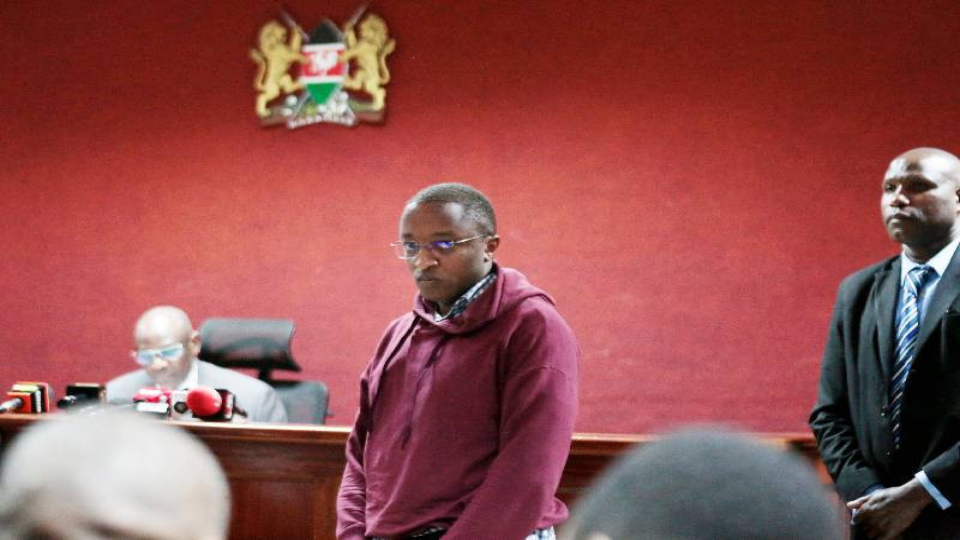
Court Rejects IT Specialist Ndiang’ui Kinyagia’s Bid to Retrieve Passport During Active Cybersecurity Investigation
In a recent ruling that underscores the tension between individual rights and national security concerns, a Nairobi court has turned down a request from prominent IT expert and social media commentator Ndiang'ui Kinyagia to have his passport returned. The decision comes amid an ongoing probe into allegations of mishandling sensitive digital information, leaving Kinyagia unable to travel abroad for a pressing family medical matter.
Kinyagia, who has built a reputation in recent months for his vocal online critiques of governance and tech-related policies in Kenya, finds himself entangled in a case that highlights broader issues around digital privacy and state surveillance. Authorities seized his laptop, other electronic gadgets, personal papers, and travel documents, including his passport and yellow fever vaccination card, several weeks ago. The action was part of what officials describe as a critical examination into possible violations of laws governing cybersecurity and the protection of confidential data.
The expert maintains that he has committed no offense and views the confiscation of his belongings as an overreach driven by political agendas rather than legitimate legal grounds. His legal representatives have pushed back hard, asserting that withholding these items infringes on fundamental protections under the Kenyan Constitution, such as the right to own property, freedom of movement, and equitable treatment by public bodies. They emphasized that Kinyagia remains in the dark about the precise rationale behind holding onto his passport and health card, which they argue lacks transparency and due process.
The immediate trigger for the court application was a humanitarian crisis: Kinyagia's sister is critically ill in India, requiring his presence to provide support during her treatment. His attorneys framed this as an urgent situation where every day counts, urging the court to prioritize the family emergency over the unresolved inquiry. However, state prosecutors firmly opposed any temporary handover of the passport, warning that it could disrupt the investigative process at a delicate stage.
According to the prosecution's stance, the seized materials form the backbone of an active investigation under review by the Director of Public Prosecutions, who is weighing options for formal charges. Releasing the passport now, they contended, risks undermining the probe's integrity and could allow for potential evasion or tampering with evidence. The court, in a concise determination, sided with this position by rejecting the preliminary plea. Instead, it instructed Kinyagia's team to submit detailed formal arguments ahead of a full hearing.
To allow time for these preparations, the judge set the next court date for January 15, 2026, when a more definitive judgment on the passport's status will be delivered. This adjournment keeps Kinyagia grounded in Kenya for the foreseeable future, amplifying the personal toll of the legal standoff.
The saga unfolded over the past few months, blending Kinyagia's rising public profile with escalating scrutiny from law enforcement:
- Recent Months Leading Up: Kinyagia's sharp social media posts on topics like government accountability and digital ethics caught widespread notice, positioning him as a key voice in Kenya's online discourse.
- Several Weeks Prior to Court Filing: A team of investigators raided his premises, taking possession of electronic devices, confidential files, and travel essentials like the passport and yellow fever card. No arrests followed, but the move signaled the gravity of the cybersecurity allegations.
- Pre-January 15, 2026 Filing: With his sister's health deteriorating rapidly, Kinyagia turned to the courts via his counsel, seeking an interim order to secure his passport for the trip to India.
- Court Hearing: Both sides presented their cases vigorously. The defense highlighted constitutional breaches and the life-or-death family angle, while prosecutors stressed the probe's sensitivity and the Director of Public Prosecutions' ongoing evaluation for potential prosecution.
- Ruling and Adjournment: The denial of the interim relief came swiftly, with directions for comprehensive submissions. The January 15, 2026, mention date now looms as the pivotal moment for resolution.
While specifics on the alleged infractions remain under wraps, the investigation zeroes in on suspected improper access or use of protected digital assets. Kenyan authorities have flagged it as a matter touching on core cybersecurity protocols and data integrity laws, though no formal accusations have been lodged against Kinyagia to date. The Director of Public Prosecutions continues to sift through the evidence dossier, deciding on next steps that could range from dropping the matter to filing indictments.
Kinyagia's predicament resonates in a landscape where digital activists and tech professionals increasingly face pushback for their expressions. His case raises pointed questions about the balance between probing potential threats and safeguarding personal liberties, especially when travel documents become leverage in uncharted investigations. As the January hearing approaches, observers will watch closely to see if the court leans toward expedited relief or upholds the state's security imperatives.
For Kinyagia, the wait is more than procedural; it is a race against time for his family's sake. Updates on this developing story will follow as new details emerge from the judicial process.