

Djibouti Constitutional Amendment Removes Presidential Age Limit, Enabling Guelleh’s Potential Sixth Term
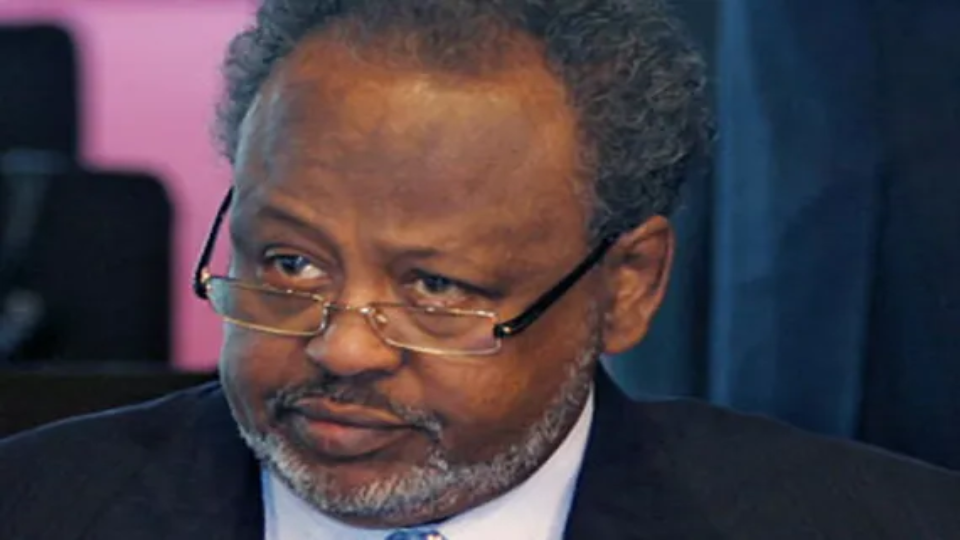
Djibouti City, Djibouti - In a significant political development, Djibouti's parliament has voted to amend the country's constitution, abolishing the presidential age limit of 75 years. The decision, passed on October 25, 2025, with 134 votes in favor out of 150 members of the National Assembly, clears the way for President Ismail Omar Guelleh, aged 77, to potentially seek a sixth term in the upcoming 2026 presidential election. This move has sparked widespread debate, with supporters praising Guelleh's leadership and critics warning of further democratic backsliding in the strategically located Horn of Africa nation.
The constitutional amendment, proposed by Prime Minister Abdoulkader Kamil Mohamed, eliminates Article 23's age cap, which previously barred candidates over 75 from running for president. The change was approved in a single day during an extraordinary parliamentary session, reflecting the ruling coalition's dominance in the legislature. The coalition, led by Guelleh's Union for the Presidential Majority (UMP), holds a supermajority, ensuring the amendment faced no significant opposition in parliament. The vote followed a brief debate, with the ruling coalition arguing that the age limit was arbitrary and restricted the democratic right to choose leaders based on experience and merit.
President Guelleh, who has led Djibouti since 1999, is one of Africa's longest-serving leaders. His tenure has been marked by political stability and economic growth, largely driven by Djibouti's strategic position as a key port and military hub. The country hosts military bases for several global powers, including the United States, China, France, and Japan, due to its proximity to the Red Sea and the Gulf of Aden, critical routes for global trade. Under Guelleh's leadership, Djibouti has invested heavily in port infrastructure and positioned itself as a logistics hub, fostering economic ties with regional and international partners.
Supporters of the amendment argue that Guelleh's experience is vital for maintaining Djibouti's stability and continuing its development trajectory. They point to his role in securing foreign investment and managing the country's strategic alliances. The ruling coalition emphasized that removing the age limit aligns with democratic principles by allowing voters, rather than constitutional restrictions, to decide their leader. The government has also highlighted recent infrastructure projects, such as the expansion of the Port of Djibouti and renewable energy initiatives, as evidence of Guelleh's effective governance.
However, opposition groups and critics have condemned the amendment as a move to entrench Guelleh's power and undermine democratic processes. The opposition, though small and fragmented, boycotted the parliamentary vote, labeling it a step toward "presidency for life." They argue that the amendment consolidates Guelleh's grip on power, especially after a previous constitutional change in 2010 eliminated term limits, allowing him to run indefinitely. Critics point to Djibouti's history of restricted political freedoms, including limited press freedom and the marginalization of opposition parties, as evidence of democratic erosion. Human rights organizations have frequently raised concerns about the suppression of dissent, arbitrary arrests, and lack of electoral transparency in the country.
The amendment comes at a time of heightened political tension in Djibouti. In recent years, opposition figures have faced harassment, and public protests have been rare due to strict government controls. The 2021 presidential election, in which Guelleh won 97 percent of the vote, was criticized by opposition groups for irregularities and lack of competition. With the 2026 election approaching, analysts predict that the removal of the age limit will ensure Guelleh faces little challenge, given the ruling coalition's dominance and the opposition's limited resources.
Djibouti's strategic importance amplifies the significance of its political developments. The country's stability is closely watched by international partners, particularly those with military and economic interests in the region. The presence of foreign military bases has brought economic benefits but also scrutiny over governance and human rights. Some analysts suggest that global powers may prioritize stability over democratic concerns, given Djibouti's role in regional security and counterterrorism efforts.
Public reaction to the amendment has been mixed. In the capital, Djibouti City, some residents expressed support for Guelleh, citing his role in maintaining peace and driving economic progress. Others, particularly younger citizens, voiced frustration over the lack of political pluralism and opportunities for new leadership. Social media platforms have seen limited but vocal criticism, though the government's tight control over media and public gatherings restricts open debate.
As Djibouti prepares for the 2026 election, the constitutional amendment marks a pivotal moment in its political landscape. Guelleh, who succeeded his uncle Hassan Gouled Aptidon in 1999, has not yet confirmed his candidacy but is widely expected to run. The removal of the age limit ensures that he can legally do so, potentially extending his presidency well into his 80s. For now, the amendment reinforces the ruling coalition's control, while raising questions about the future of democracy in Djibouti.
The international community, including regional bodies like the African Union, has yet to comment officially on the amendment. As Djibouti navigates its complex role as a geopolitical hub, the world will be watching how this change shapes its political and social fabric in the years ahead.