

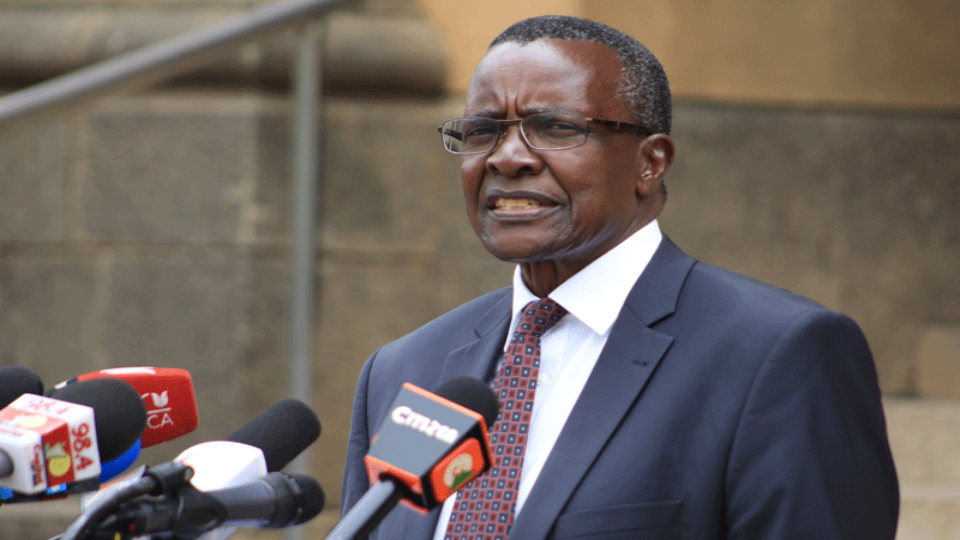
Former Chief Justice David Maraga Vows to Join Opposition to Challenge Ruto in 2027
Former Chief Justice David Maraga has ignited Kenya's political landscape with a bold declaration to collaborate with opposition leaders to unseat President William Ruto in the 2027 presidential election. Speaking in Kisumu during visits to the Anglican Church of Kenya Maseno Diocese and the Pentecostal Church in Kibos, Maraga outlined a vision centered on constitutionalism, anti-corruption, and inclusive governance, positioning himself as a reformist leader ready to reshape the nation's future.
Maraga's announcement has sent shockwaves through the political scene, hinting at a potential coalition to challenge Ruto's bid for a second term. Addressing congregants, he expressed readiness to work with opposition leaders who share his commitment to restoring integrity in public service and upholding the rule of law. His remarks drew enthusiastic support, signaling his potential to galvanize reform-minded voters.
Political analysts suggest Maraga's entry could significantly bolster the opposition. His reputation for integrity, earned through his steadfast defense of judicial independence and the historic nullification of the 2017 presidential election, is seen as a valuable asset. One analyst noted that Maraga's moral authority could enhance the opposition's credibility, particularly for leaders like Wiper Party's Kalonzo Musyoka, despite Maraga's limited financial resources.
However, not all observers are convinced of Maraga's immediate impact. Some argue that a successful presidential campaign demands substantial resources, a robust secretariat, and widespread public enthusiasm, areas where Maraga has yet to demonstrate strength. Critics point out that he has not yet held a political rally, and his ability to mobilize voters remains untested. They caution that defeating an incumbent like Ruto requires more than moral standing; it demands strategic organization and financial backing.
Maraga's move marks a significant shift from his judicial past to a potential executive role. He emphasized his commitment to serve as a guardian of the Constitution and a servant of the people. In a direct appeal to Kenya's youth, he urged them to move beyond social media activism and engage in civic responsibility by registering as voters. He stressed that meaningful change begins at the ballot box, encouraging young Kenyans to vote to address injustices rather than merely voicing complaints online.
The former Chief Justice's focus on ethics and constitutional fidelity could resonate with citizens frustrated by corruption and political deceit. His announcement in Kisumu, a city long associated with reform and resistance, underscores his intent to challenge the dominance of established political parties like the Orange Democratic Movement (ODM). By positioning himself as a unifying figure for anti-incumbent forces, Maraga aims to build a coalition capable of disrupting the status quo.
Despite his ambitions, some strategists argue that Kenya's electoral system, which requires a candidate to secure 50 percent plus one vote, favors a two-horse race between the ruling coalition and the main opposition. This dynamic could limit Maraga's influence as a third force, as historical voting patterns since 2010 suggest a polarized contest between two dominant blocs.
As the 2027 election approaches, Maraga's declaration sets the stage for a potentially transformative campaign. While key opposition figures like Kalonzo Musyoka and former Deputy President Rigathi Gachagua have yet to respond to his plans, Maraga's entry could attract support from Ruto's critics, who are currently struggling to coalesce behind a unified opposition front. Whether he can translate his judicial legacy into political success remains uncertain, but Maraga's shift from interpreting the law to aspiring to lead signals a new chapter in Kenya's political evolution.