

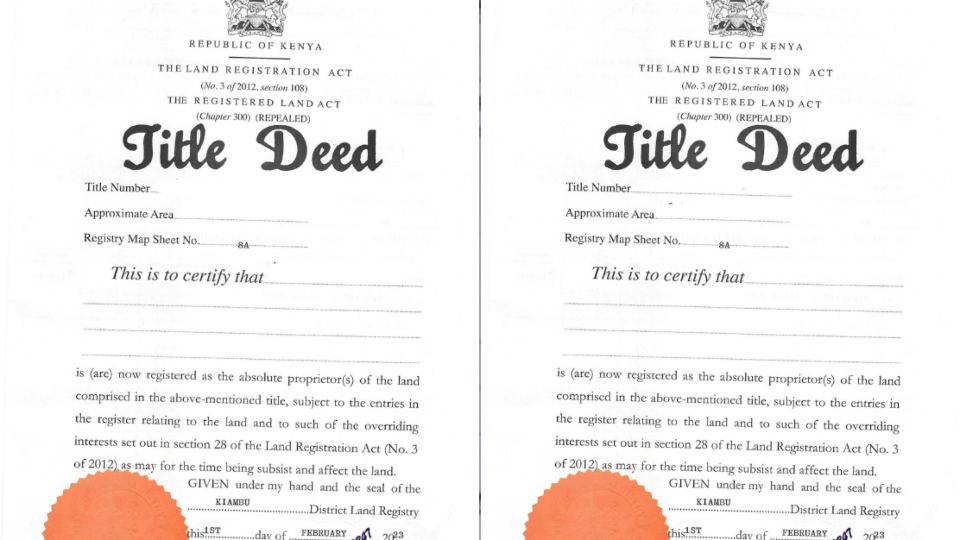
How to Replace a Lost Title in Kenya
Losing a land title deed in Kenya can be a stressful experience, as this document is the legal proof of property ownership under the Land Registration Act, 2012. The loss exposes your property to potential fraud, making prompt replacement essential. The process, governed by the Land Registration Act, 2012 and the Land Registration (General) Regulations, 2017, involves reporting the loss, verifying ownership, public notification, and issuance of a new title deed. Typically, it takes 3 to 6 months due to a mandatory 60-day objection period and administrative verifications. Engaging a lawyer is advisable to ensure accuracy and compliance, especially for complex cases. Below is a detailed, step-by-step guide to replacing a lost title deed in Kenya.
Step-by-Step Process
1. Report the Loss to the Police
As soon as you realize your title deed is lost, visit the nearest police station to report it, as required under Section 15 of the Land Registration Act, 2012. This step establishes a formal record of the loss and helps prevent fraudulent use of the document. Provide the following:
-
Title number (found on the original title deed or previous land search).
-
A copy of the title deed (if available).
-
Your national ID or passport for identification.
The police will issue a police abstract, an official document confirming the loss, which is critical for subsequent steps. This process is usually quick, often completed within a day.
2. Conduct an Official Land Search
Before proceeding, verify your ownership by conducting an official land search at the relevant Lands Registry (e.g., Nairobi, Mombasa, or county-specific registry). Submit the title number, your ID, and the requisite fees. The search confirms that the property is still registered in your name and checks for encumbrances (e.g., liens or caveats). The search report is a required document for the replacement application.
3. Swear an Affidavit of Loss
Prepare a sworn affidavit before a Commissioner for Oaths or notary public to formally declare the loss. The affidavit must include:
-
Your personal details (full name, ID number, contact information).
-
Property details (land parcel number, location, and type of title, freehold or leasehold).
-
A clear explanation of how the title was lost (e.g., misplaced, stolen, or destroyed).
-
A declaration that the title was not pledged as security for a loan, sold, or intentionally disposed of.
-
A commitment to surrender the original title if found.
Attach the police abstract and land search report to the affidavit. The requisite fees for drafting and swearing the affidavit vary, depending on the lawyer or commissioner.
4. Register a Caution (Optional but Recommended)
To protect your property from unauthorized transactions during the replacement process, consider registering a caution under Section 77 of the Land Registration Act, 2012 at the Lands Registry. This acts as a temporary "freeze" on the property, preventing sales, transfers, or other dealings without your consent. The caution requires the requisite fees and can be removed once the new title is issued.
5. Apply to the Lands Registry
Download and complete Form LRA 12 (Application for Replacement of Certificate of Title) from the State Department for Lands and Physical Planning website or obtain it from the Lands Registry. Submit the form to the appropriate Lands Registry office, along with the following documents:
-
Police abstract.
-
Sworn affidavit.
-
Certified copies of your national ID or passport.
-
Two colored passport-sized photos.
-
Official land search report.
-
An application letter detailing the circumstances of the loss.
-
Proof of payment for the requisite fees.
The registrar will verify the documents to ensure compliance and confirm your ownership. This step may take a few days to weeks, depending on the registry’s workload.
6. Publication of Notice by the Registrar
Upon verification, the registrar publishes a notice using Form LRA 13 in the Kenya Gazette and at least two daily newspapers with nationwide circulation (e.g., Daily Nation or The Standard), as mandated by Section 33(5) of the Land Registration Act, 2012. The notice announces the loss, your intent to replace the title, and invites objections within a 60-day waiting period. You are responsible for the requisite fees for publication, paid to the government printer and newspapers. This step ensures transparency and allows anyone with a claim to the property to come forward.
7. Wait for the Objection Period and Verification
During the 60-day period, the registrar monitors for objections. If none are raised, they proceed with verification, updating the land register (green card for freehold or white card for leasehold). If objections arise, they must be resolved legally, which may delay the process. The registrar may also request additional documents or a site visit to verify boundaries.
8. Issuance of the New Title Deed
If no objections are received and verification is complete, the registrar issues a replacement title deed under Section 33(6) of the Land Registration Act, 2012. The new title has the same legal validity as the original but includes a notation indicating it is a replacement. Collect it from the Lands Registry after it is signed and sealed. If the original title is found later, you must surrender it to the registrar for cancellation. In some cases, a provisional certificate may be issued while the permanent title is prepared.
Required Documents
To streamline the process, ensure you have the following:
-
Police abstract (from the police station).
-
Sworn affidavit (notarized).
-
Certified copies of your national ID or passport.
-
Two colored passport-sized photos.
-
Official land search report (from the Lands Registry).
-
Application letter explaining the loss.
-
Proof of payment for the requisite fees.
-
Title number and ID/passport (for the police report and search).
Timelines
-
Police report: Immediate (same day, if reported promptly).
-
Land search: 1 to 3 days.
-
Affidavit preparation: 1 to 2 days.
-
Application processing: 1 to 2 weeks (depending on registry efficiency).
-
Gazette publication and objection period: Minimum 60 days.
-
Verification and issuance: 2 to 4 weeks after the objection period.
-
Total duration: Approximately 3 to 6 months, assuming no objections or delays.
Important Notes
-
Act quickly: Report the loss immediately to minimize the risk of fraudulent transactions.
-
Replacement notation: The new title deed will be marked as a replacement to distinguish it from the original.
-
Joint ownership: If the property is co-owned, all owners must consent and participate in the process (e.g., signing the affidavit and application).
-
Legal assistance: Engage a lawyer, especially for high-value properties, disputed land, or cases with encumbrances (e.g., mortgages or caveats). A lawyer ensures compliance and handles complications.
-
Verification of forms: Use official forms (LRA 12 and LRA 13) from the State Department for Lands and Physical Planning website or Lands Registry to avoid errors.
-
Fraud prevention: Registering a caution during the process adds a layer of protection against unauthorized dealings.
-
Regional variations: Procedures and fees may slightly differ across counties, so confirm with the local Lands Registry.
Conclusion
Replacing a lost title deed in Kenya is a structured but time-consuming process that requires diligence and adherence to legal requirements. By promptly reporting the loss, gathering the necessary documents, and following the outlined steps, you can secure a replacement title and protect your property rights.
For personalized guidance, consult with us today at +254716808104 or info@lawguide.co.ke.