

Kenya to Launch National Infrastructure Fund to Boost Development and Reduce External Borrowing
Kenya is set to establish a National Infrastructure Fund to finance major development projects, including roads, dams, and power generation, in a strategic move to reduce reliance on external borrowing and promote sustainable local development. The initiative aims to address funding gaps that have long stalled critical infrastructure projects across the country.
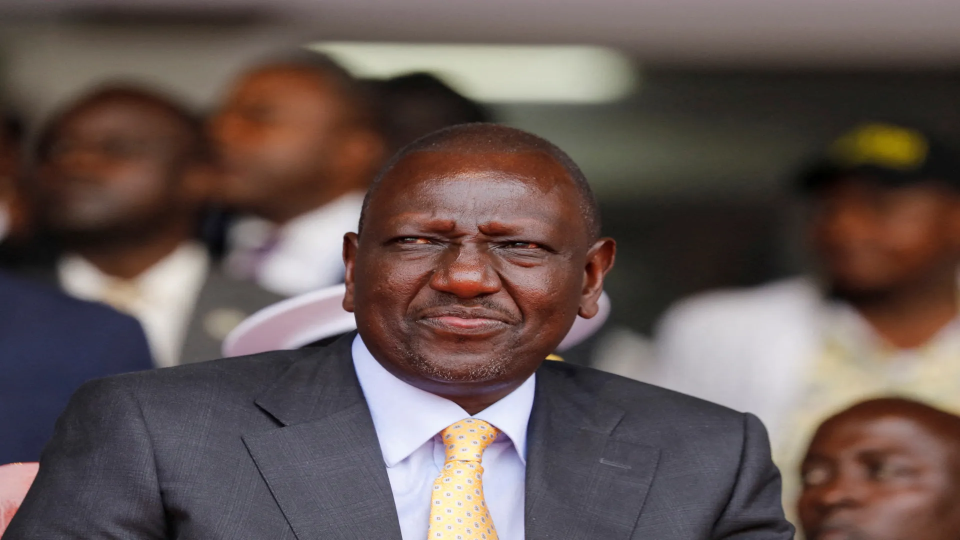
President William Ruto announced the plan during a church service at St. Mary's AIPCA Church in Kathelwa, Igembe Central, Meru County, on Sunday. He emphasized that the fund will enable the government to complete stalled projects, initiate new ones, and significantly expand the nation's power generation capacity to 10,000 megawatts. The President highlighted the challenges of securing sufficient funds for infrastructure, stating that the country must adopt innovative local financing mechanisms to drive growth. He is actively engaging Members of Parliament to garner support for the creation of the fund.
In Meru County alone, the President noted that approximately 40 billion shillings are needed for water projects, a sum equivalent to the entire country's current allocation for such initiatives. He stressed the importance of elevating Kenya's development trajectory beyond that of a third-world nation, urging lawmakers to back the initiative to ensure progress.
The President also addressed political challenges, accusing opposition parties of engaging in negative politics and premature campaigning that diverts focus from development. He dismissed slogans such as "Ruto must go" and "one term" as empty rhetoric lacking substance, contrasting them with his administration's achievements over the past two years. He called for unity to avoid the pitfalls that have hindered Kenya's progress compared to nations like Singapore.
In a significant announcement, President Ruto revealed that Meru town will be elevated to city status, making it Kenya's sixth city. To support this transition, the government, in collaboration with the World Bank, has allocated 5 billion shillings for a 10-kilometer road and bypass network in Meru. Additionally, 800 million shillings will fund the construction of 17 modern markets, and 1 billion shillings will go toward upgrading Meru Level Five Hospital. A state lodge in Meru is also slated for completion by December this year.
Infrastructure development in Meru County is set to receive a significant boost, with 2 billion shillings allocated for the construction and rehabilitation of roads. These projects, previously delayed by economic slowdown and inflation in 2022, will now proceed under a funded two-year plan to enhance road safety. Furthermore, 7 billion shillings have been designated for redesigning the Nithi Bridge, a notorious safety hazard responsible for numerous accidents and fatalities over the past two decades.
On the housing front, President Ruto announced that 2,000 affordable housing units have been completed in Meru County, with plans for an additional 8,000 units pending land acquisition. Of the 33 billion shillings allocated for housing in Meru, 21 billion have been utilized, with 12 billion remaining for future projects.
Education and electrification were highlighted as key pillars of the administration's development agenda. The government has employed 100,000 teachers and constructed 23,000 schools to ensure universal access to quality education. University and technical college fees have been reduced by 14 to 15 percent, with students from disadvantaged backgrounds now paying only 10,000 shillings per term. Additionally, 2 billion shillings have been earmarked for rural electrification projects in Meru County, targeting 26,000 households.
The establishment of the National Infrastructure Fund marks a pivotal step toward self-reliant and sustainable development in Kenya, with Meru County poised to benefit significantly from these transformative initiatives.