

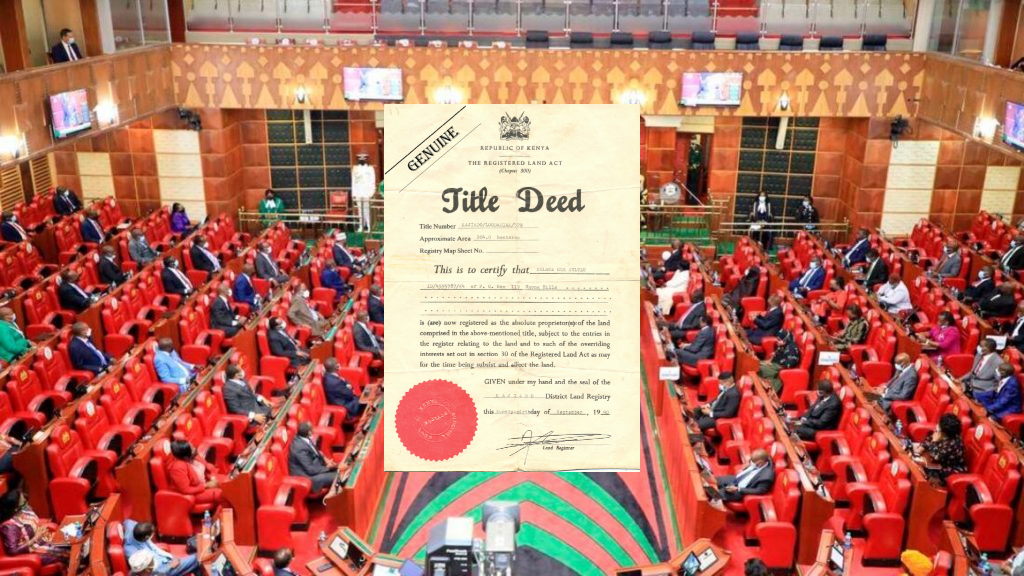
MPs Demand Full Disclosure of Public Land in Legal Disputes Amid Missing Title Deeds
Members of Parliament have issued a three-month ultimatum to the Inspector General of State Corporations and the Attorney General to compile a comprehensive report detailing all public land embroiled in ownership disputes. The directive comes in response to growing concerns over missing title deeds for properties held by various State entities, raising fears of potential loss of public assets.
The Public Investments Committee on Social Services Administration and Agriculture, chaired by Navakholo MP Emmanuel Wangwe, emphasized that the report will serve as a foundation for potential inquiries into the ownership and repossession of public land where necessary. To safeguard these assets, the committee has instructed the Inspector General to place caveats on all State corporation land currently in private hands, aiming to prevent further erosion of public property. Once finalized, the report will be tabled in Parliament for review and to determine further action.
The committee's investigation into selected State corporations uncovered significant issues with land ownership. Notably, the Child Welfare Society of Kenya was found to hold 19 parcels of land of undetermined value without title deeds. Other affected entities include the Syndemic Diseases Control Council (formerly the National Aids Control Council), the National Social Security Fund (NSSF), and the National Cancer Institute. A striking example at the NSSF involves a title deed that was revoked through the Kenya Gazette after being initially issued to a private developer. The National Land Commission later clarified that the parcel had been reserved for public purposes.
To address systemic vulnerabilities in public land management, the committee proposed that the National Assembly enact legislation mandating that all public land ownership documents be centrally stored under the custody of the National Treasury for safekeeping. This measure aims to enhance accountability and prevent future disputes over public land.
Beyond land-related concerns, the committee's report highlighted several operational and governance lapses in State corporations. It criticized delays in handling imprests, poor governance practices, and long-outstanding payables. Additionally, many entities failed to submit complete and reconciled financial and accounting records to the Auditor General in time for audit review and verification, further undermining transparency.
To address these issues, the committee issued several directives. It instructed accounting officers to recover all outstanding imprests from their due dates, with a warning that failure to comply would result in surcharges for the full amounts owed. The report also exposed governance shortcomings, including the absence of internal audit functions and audit committees within boards, irregular board meetings, inflated allowances and compensations, and weak information technology and management controls.
The committee also raised alarms over long-outstanding payables, noting that State corporations were struggling to recover debts due to ineffective collection systems. It directed all affected entities to initiate recovery measures within statutory provisions and to prepare detailed reports outlining the origins of these debts, reasons for non-payment, steps taken for recovery, and clear timelines for settlement. The report further stipulated that within three months of its adoption, entities with outstanding receivables must initiate recoveries, identify debts deemed irrecoverable, provide justifications, and submit a board-approved report to the Treasury for approval of any write-offs.
The committee urged all State corporations to fully implement its recommendations to strengthen accountability, improve governance, and protect public assets. These measures are seen as critical steps toward ensuring transparency and safeguarding public resources from mismanagement and loss.