

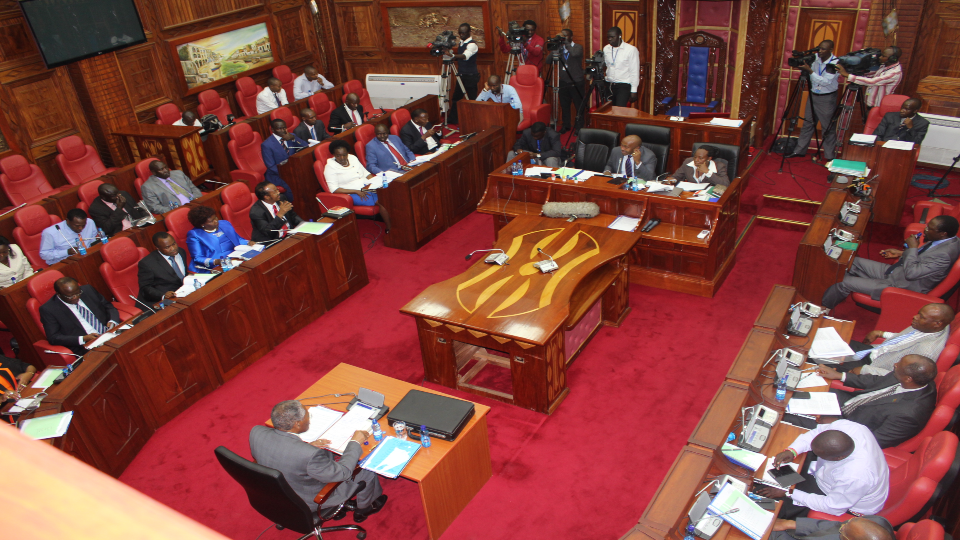
Senate Bill Targets Backlog in Land Disputes with Strict Two-Year Deadline for Court Resolutions
Nairobi - In a bold move to tackle one of the most persistent challenges in Kenya's judicial system, a new legislative proposal aims to impose a firm two-year limit on resolving cases in the Environment and Land Court. The Environment and Land Court (Amendment) Bill, 2025, introduced by nominated Senator Tabitha Mutinda, seeks to end the frustration caused by protracted land disputes that have left thousands of Kenyans in limbo for years.
The bill, which has received the green light from the Senate's Justice, Legal Affairs, and Human Rights Committee for publication and its first reading in the House, introduces a clear statutory timeline. Under the proposed amendment, the court must hear and determine all cases within two years from the date they are filed. This provision reads directly from the bill's text: In exercise of its jurisdiction under this section, the Court shall hear and determine cases within two years after they are filed. Senator Mutinda, in the bill's accompanying memorandum, emphasized the urgency of this reform, stating that it will help litigants get justice within a reasonable time and also help the Court dispense with land cases without undue delays.
Land disputes remain a deeply sensitive issue in Kenya, often fueling community tensions, economic stagnation, and even violence in affected regions. The Environment and Land Court, established to handle these specialized matters, has struggled under a mounting caseload exacerbated by frequent adjournments, unprepared legal counsel, absent parties, and the inherently complex nature of such cases. These proceedings typically demand extensive evidence, historical documents, and testimony from multiple witnesses, leading to drawn-out trials that drain resources and erode public trust in the judiciary.
Data from the Judiciary underscores the scale of the problem. As of December last year, the court was grappling with 13,971 unresolved disputes, of which 9,335 had lingered for more than a year. The heaviest backlogs were concentrated in key divisions: Milimani with 1,645 pending cases, Thika at 1,231, and Eldoret reporting 1,066. These figures highlight how delays not only prolong personal hardships for families and farmers but also hinder broader development efforts, such as infrastructure projects and agricultural investments that hinge on clear land titles.
Despite these challenges, the Judiciary has made notable strides in recent years to address the backlog. Through investments in technology upgrades, court-annexed mediation programs, and streamlined processes, the court achieved a 20 percent reduction in pending matters. For instance, between July and December last year, the Environment and Land Court received 3,629 new cases but successfully resolved 5,170, yielding an impressive case clearance rate of 142 percent. A clearance rate above 100 percent indicates that the court is not only managing incoming filings but actively chipping away at older accumulations, a positive trend attributed to innovative efficiency measures.
The Judiciary continues to push for systemic improvements, including the digitization of land records to reduce paperwork bottlenecks, the recruitment of additional judges to bolster courtroom capacity, and an expansion of mediation initiatives to settle disputes out of court. These efforts align closely with the spirit of Senator Mutinda's bill, which could amplify their impact by embedding enforceable deadlines into law.
If enacted, the two-year cap promises to transform how land justice is delivered in Kenya. Litigants, many of whom represent vulnerable smallholders or displaced communities, stand to benefit from faster resolutions that prevent disputes from festering into larger crises. For the court system, it would enforce discipline in scheduling and preparation, potentially freeing up resources for emerging cases. Experts suggest this could also encourage alternative dispute resolution mechanisms, as parties weigh the risks of missing the deadline against negotiating settlements.
As the bill advances through the Senate, it arrives at a pivotal moment for land governance in the country. With ongoing debates around constitutional land reforms and the push for equitable resource distribution, this proposal could mark a turning point toward a more responsive and efficient judiciary. Stakeholders, from legal practitioners to civil society groups, will be watching closely to see if the measure delivers on its promise of timely justice for all Kenyans entangled in the web of land ownership battles.