

US Intensifies Diplomatic Push as Gaza Ceasefire Faces Major Setback
Cairo/Jerusalem – The United States has ramped up its diplomatic engagement in the Middle East, dispatching high-level envoys to Israel amid escalating tensions that have severely tested a fragile truce in Gaza. The agreement, brokered just a week ago, endured a violent rupture over the weekend, prompting urgent interventions from American officials and Arab mediators to prevent a full collapse. As of October 20, 2025, both Israel and Palestinian militants have pledged renewed adherence to the ceasefire, but residents in the war-torn enclave remain gripped by uncertainty and fear of renewed bombardment.
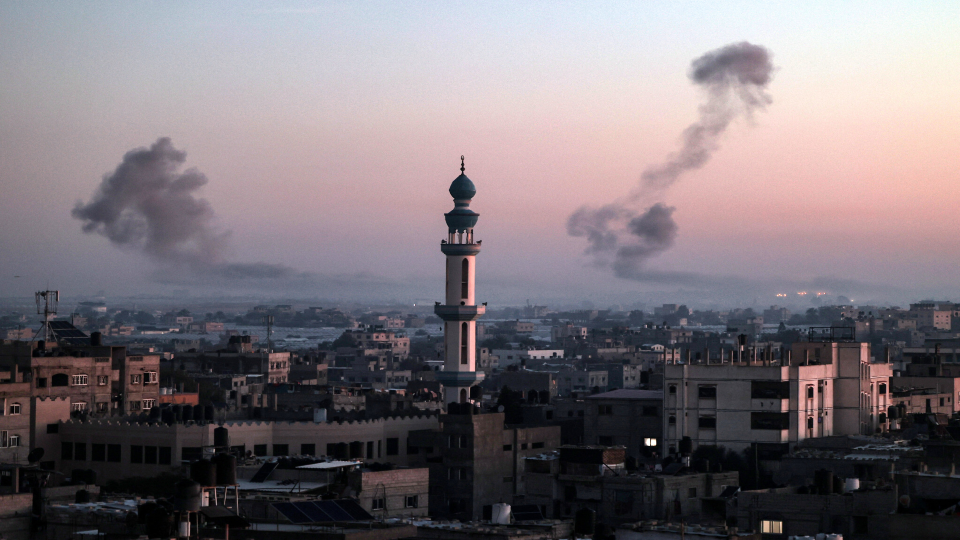
The crisis intensified on Sunday with a barrage of Israeli airstrikes across Gaza, which local health authorities say claimed at least 28 lives. The strikes came in direct retaliation for an assault by Palestinian fighters in the southern city of Rafah, where two Israeli soldiers were killed while stationed within a designated buffer zone. Israeli officials labeled the attack a clear breach of the truce terms, attributing it to Hamas militants operating in violation of agreed troop deployments. In response, Israel's military unleashed heavy fire, targeting suspected militant positions and halting the flow of essential supplies into the territory for several hours.
By Monday morning, the situation had deteriorated further. In the Gaza City suburb of Tuffah, tank shells from Israeli forces struck near a newly established ceasefire demarcation known as the "yellow line," killing three civilians according to medics on the scene. Witnesses described chaotic scenes of shelling extending to areas east of Deir al-Balah in central Gaza, where displaced families huddled in makeshift shelters amid the ruins. The yellow line represents a critical boundary for Israel's partial military withdrawal from populated zones, but its implementation remains haphazard. While electronic maps outline the route, physical markers are scarce, leading to widespread confusion among Gaza's 2.3 million residents. Israel's army released footage on social media showing engineering teams deploying bulldozers to position yellow concrete blocks along the line, a step intended to clarify the divide but which has so far failed to quell local anxieties.
Hamas, the Islamist group controlling Gaza, denied any involvement in the Rafah incident, with its armed wing asserting no communication with local factions since March. The group countered by cataloging what it called a litany of Israeli infractions over the truce's short lifespan, including strikes that purportedly killed 46 people and temporarily blocked humanitarian aid. Despite earlier warnings from Jerusalem to suspend deliveries, an Israeli security source confirmed that aid convoys would resume entering Gaza without interruption, averting an immediate humanitarian catastrophe. In the enclave, panic gripped markets as residents rushed to stockpile food and fuel, driving up prices amid fears that the truce could unravel completely.
The United States, under President Donald Trump, has positioned itself as the primary architect of the ceasefire and is now leading the charge to salvage it. Envoys Steve Witkoff and Jared Kushner, the president's son-in-law and a key advisor on Middle East policy, arrived in Israel to advocate for advancing to the agreement's second phase. Their visit, planned prior to the flare-up, focuses on securing commitments for further Israeli withdrawals and the release of additional hostages held by Hamas. Trump himself addressed the turmoil from aboard Air Force One, emphasizing that the core of the deal remains intact and hinting that rogue elements, rather than Hamas's top leadership, may bear responsibility for the violations. Vice President JD Vance is slated to follow suit with a trip to Israel on Tuesday, signaling Washington's unwavering commitment to stabilizing the region.
Arab nations have matched the American urgency with their own initiatives. Egypt convened emergency talks in Cairo on Monday, hosting Khalil al-Hayya, Hamas's senior leader in exile, to hammer out details on enforcing the truce. Discussions reportedly centered on establishing a temporary technocratic administration for Gaza, comprising non-partisan experts to oversee reconstruction and governance, deliberately excluding Hamas affiliates. This proposal aligns with broader Israeli demands to neutralize the group's influence but clashes with Hamas's staunch opposition to any foreign oversight or disarmament mandates. Qatar, a longtime mediator, played a behind-the-scenes role in de-escalating the immediate crisis, though specific contributions from Doha were not detailed in the proceedings.
Israel's leadership has adopted a hardline posture, with Defense Minister Israel Katz issuing stark warnings to any militants lingering in Israeli-controlled zones: immediate evacuation or face lethal targeting. The military's video of yellow line markers, shared widely online, serves as both a practical update and a public relations tool to demonstrate compliance efforts. Yet, underlying frictions persist. Jerusalem insists on Hamas's complete demilitarization and expulsion from Gaza as prerequisites for deeper concessions, conditions that dovetail with Trump's ambitious 20-point roadmap for lasting peace. Hamas, for its part, has rebuffed these terms, vowing to retain its defensive capabilities and rejecting any imposed administrative overhaul.
Humanitarian fallout from the weekend's clashes compounds Gaza's dire straits. The territory, already a landscape of shattered buildings and displaced communities after prolonged conflict, saw essential services like water and electricity flicker under the aid blockade. In Tuffah and surrounding areas, families navigated debris-strewn streets, their homes reduced to rubble by prior operations. Displaced Gazans in central camps voiced profound dread, with one resident noting the psychological toll of oscillating hopes for peace and sudden terror. Aid agencies warn that sustained disruptions could push malnutrition rates higher, especially among children, in a population already strained by 18 months of intermittent warfare.
Progress on hostage negotiations offers a faint glimmer amid the gloom. Hamas announced the recovery of another captive's body, expressing willingness to transfer it under safe conditions, potentially paving the way for the release of up to six remains in Israeli hands. Israel's public broadcaster reported preparations for such a handover, though officials privately doubt Hamas's ability to retrieve all 16 bodies scattered across the devastated terrain. These exchanges could unlock further truce advancements, but only if mediators bridge the widening trust deficit.
As envoys converge and talks intensify, the stakes could not be higher. The truce's survival hinges on swift resolutions to demarcation disputes and violation accountability, lest a single misstep ignite a broader conflagration. For Gaza's beleaguered inhabitants, the yellow line symbolizes not just a border, but a precarious lifeline between fragile hope and unrelenting despair. With U.S. diplomacy at the forefront, the international community watches closely, aware that failure here risks unraveling months of painstaking brokerage.