

What Can the King Do About Prince Andrew Scandals?
Fresh revelations about Prince Andrew's lingering ties to the convicted sex offender Jeffrey Epstein have reignited intense scrutiny on the Duke of York, prompting renewed questions about the Royal Family's ability to contain the fallout. Front-page headlines in major newspapers, including The Sun and the Mail on Sunday, spotlighted a previously undisclosed email from February 2011 that appears to contradict Andrew's public account of severing contact with Epstein. In that message, Andrew addressed Epstein with an unusually personal tone, writing "We are in this together," a phrase that starkly clashes with his 2019 BBC Newsnight interview. There, Andrew insisted he had ended their association after a December 2010 meeting in New York, during which the two men were photographed strolling together in the city.
This latest email forms part of a broader trove of correspondence from the same period that surfaced earlier this year, further eroding Andrew's credibility. Those documents already suggested the prince's connections with Epstein persisted for months beyond what he had admitted, fueling a barrage of critical media coverage and public outrage. The intimate language in the newly reported message only deepens the sense of betrayal among observers, who see it as evidence that Andrew and Epstein remained far closer than the prince has ever conceded. Complicating matters further, Andrew's ex-wife, Sarah Ferguson, the Duchess of York, has faced her own entanglement in Epstein-related emails. Her involvement led to a swift backlash, with seven prominent UK charities cutting ties with her shortly after the details emerged.
The scandals have cast a long shadow over the Royal Family, particularly as they involve a sibling of King Charles III. Each new disclosure triggers a familiar cycle of demands for decisive action, from stripping titles to outright exile from family circles. Yet the monarchy's options remain constrained by tradition, legal hurdles, and the need to avoid escalating the drama into a full-blown constitutional crisis. As the holiday season approaches, attention is turning to the annual Christmas gathering at Sandringham House in Norfolk, a cornerstone of royal tradition. Sources close to the Palace indicate that Andrew and Ferguson are unlikely to receive invitations this year. The duke faces what insiders describe as a complete "freeze-out," with any incidental appearances in footage for the King's Christmas broadcast carefully edited to exclude him. In a wry nod to the exclusion, one observer quipped that Andrew's only interaction with his brother might come via a festive carol playlist featuring "Good King Wenceslas."
This would mark a continuation of Andrew's isolation. He sat out last year's Sandringham festivities amid separate allegations linking him to a Chinese espionage scandal, and the Epstein email developments have only hardened the resolve to keep him at arm's length. Ferguson's parallel troubles have compounded the awkwardness, ensuring the entire York branch of the family remains sidelined from the Yuletide spotlight.
At the heart of the ongoing saga lies Royal Lodge, the sprawling 30-room Georgian mansion in Windsor's Home Park where Andrew has resided since 2003. Campaigners and commentators have long called for his eviction, viewing the opulent property as an undeserved perk for a disgraced royal. However, Andrew's tenure is secured by a long-term lease from the Crown Estate, running all the way to 2078. The agreement's costs were largely front-loaded upon his arrival over two decades ago, leaving little financial leverage to force a move. As long as Andrew can shoulder the upkeep, including hefty maintenance and staffing expenses, there is no straightforward mechanism to oust him. King Charles has experimented with indirect pressures, such as slashing Andrew's annual funding last year in a bid to encourage voluntary relocation. Yet the duke has proven resourceful, cultivating alternative income streams since stepping back from public duties in 2019. These include lucrative business dealings with entities in China and the Gulf States, as well as a now-defunct venture with a Dutch technology start-up. He has even shouldered the full burden of his personal security, a multimillion-pound annual outlay previously covered by public funds.
Beyond housing, the debate has intensified around Andrew's formal titles and honors. A YouGov poll conducted over the summer revealed overwhelming public sentiment, with 67 percent of respondents favoring the removal of his remaining royal designations, including the dukedom of York itself. Revoking such titles would demand parliamentary intervention, invoking a rarely used legal pathway last activated during the First World War to strip British aristocrats who sided with enemy forces of their peerages. Andrew clings to one particularly prestigious accolade: his membership in the Order of the Garter, the oldest and most exclusive chivalric order in Britain, founded in the 14th century. Theoretically, the King could orchestrate his expulsion through a process known as "degradation," a ceremonial ritual of disgrace involving the physical removal of insignia, though it has not been employed since the 18th century. More modern precedents offer glimpses of feasibility. During World War I, the order was withdrawn from figures like Kaiser Wilhelm II of Germany and Emperor Franz Joseph of Austria-Hungary. In later decades, it was rescinded from dictators including Benito Mussolini, Robert Mugabe, and Nicolae Ceausescu, whose forfeiture of the Order of the Bath was finalized just a day before his 1989 execution.
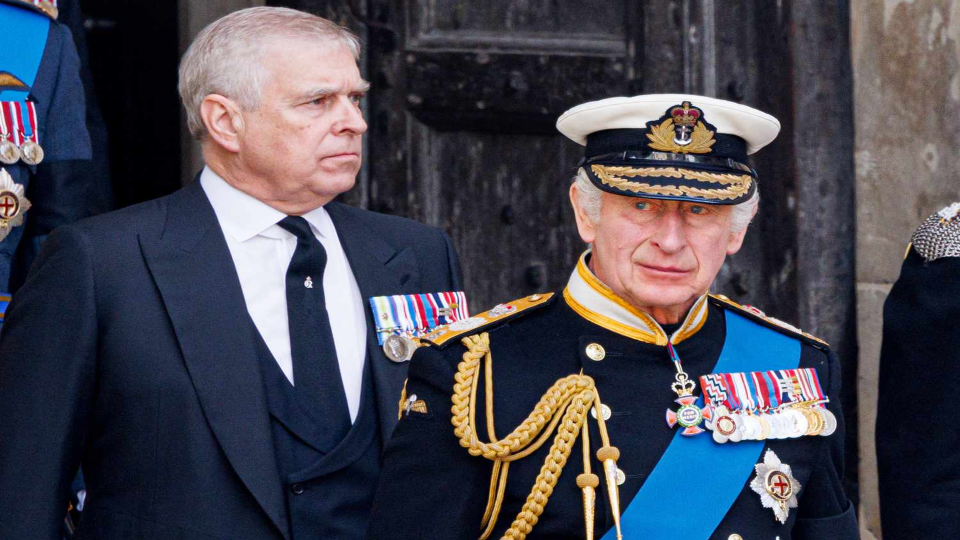
For now, Andrew's Garter status is more symbolic than active. He no longer joins the annual public procession through Windsor Castle, confining himself to the order's private rituals. A photograph from the 2015 service captures him walking alongside then-Prince Charles in full regalia, a stark contrast to his current invisibility. The Palace has consistently leaned toward these understated tactics rather than bold confrontations. In 2022, for instance, legislation quietly expanded the roster of counsellors of state, senior royals who can stand in for the monarch during absences or illnesses. The change effectively neutralized Andrew's eligibility without naming him, preserving a veneer of harmony.
Andrew's demotion has already been substantial. He forfeited his HRH style in 2022, alongside dozens of military affiliations and charitable patronages. As a non-working royal, he performs no official engagements, absolving Buckingham Palace of any responsibility for his conduct. Public appearances are off-limits, restricting him to low-key family milestones such as funerals or private memorials. Even church attendance poses a delicate boundary; as Supreme Governor of the Church of England, the King cannot prohibit his brother from services, though Andrew's presence at St. George's Chapel or Westminster Abbey would likely draw unwelcome attention.
These measures reflect a broader strategy of containment, but the Epstein scandals continue to gnaw at the monarchy's image. Palace insiders worry that the persistent drip of damaging details risks eclipsing the King's ambitious agenda, from environmental advocacy to Commonwealth diplomacy. What additional Epstein-linked documents might surface remains a pressing unknown, with ongoing legal trawls potentially unearthing more correspondence or associations. Anti-monarchy groups have seized on the controversy to demand transparency. Graham Smith, chief executive of the campaign organization Republic, emphasized the public dimension, stating that the issue transcends family privacy and warrants a thorough probe into the Royal Family's awareness of Andrew's Epstein entanglements.
As the dust settles on this latest email bombshell, the York saga underscores the monarchy's enduring vulnerability to personal failings. King Charles wields an array of subtle instruments, from fiscal squeezes to ceremonial sidelining, but outright severance proves elusive. For Andrew, ensconced in Royal Lodge and buffered by private wealth, the path to full rehabilitation appears as distant as ever. The Royal Family, meanwhile, braces for the next twist, hoping to shield its institutional relevance from one man's spectacular fall.