

World Leaders Pivot to Economic Alliances as Trump Exits ASEAN Summit Early
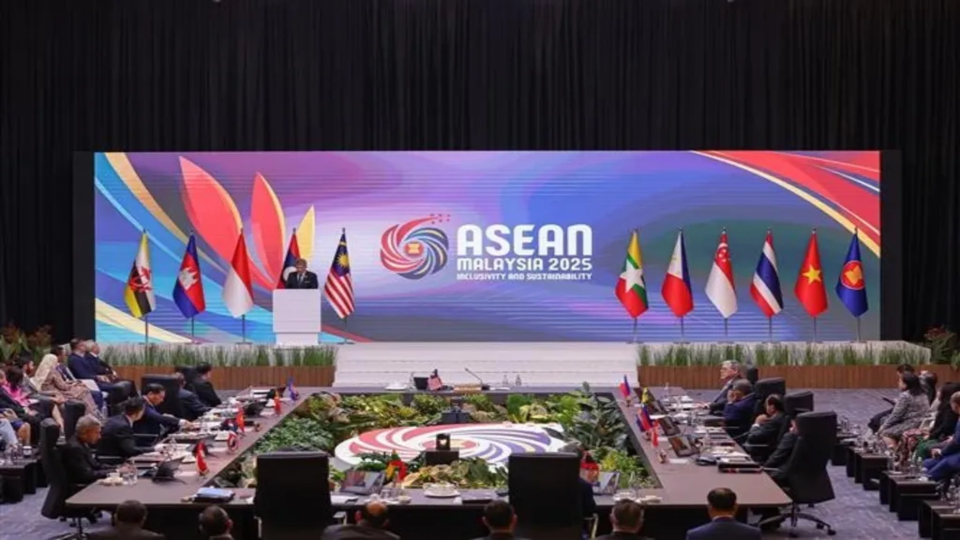
Kuala Lumpur, Malaysia – In a swift shift of diplomatic gears, global leaders from Asia, Europe, and the Americas convened on Monday at the ASEAN summit in Malaysia to forge deeper economic and trade connections, undeterred by the early departure of U.S. President Donald Trump and Secretary of State Marco Rubio. The gathering, hosted by the Association of Southeast Asian Nations (ASEAN), unfolded against a tense backdrop of escalating U.S. tariffs, persistent U.S.-China trade frictions, and Beijing's tight grip on critical resources like rare earth minerals. As Trump jetted off to Japan for the next leg of his regional tour, the focus turned squarely to multilateral strategies aimed at buffering against American protectionism.
The summit drew top officials from China, alongside heads of state from Brazil, Canada, and the European Council, as well as representatives from the 11-member ASEAN bloc, which includes Brunei, Cambodia, Indonesia, Laos, Malaysia, Myanmar, the Philippines, Singapore, Thailand, East Timor, and Vietnam. Their discussions centered on solidifying economic partnerships and negotiating fresh trade pacts, with an eye toward resilience in global supply chains. A key highlight loomed on the horizon: the China-backed Regional Comprehensive Economic Partnership (RCEP) summit, uniting 10 ASEAN nations with Australia, Japan, New Zealand, and South Korea. This bloc, already the world's largest by encompassing roughly 30 percent of global gross domestic product, emerged as a potential shield against U.S. tariff pressures, according to regional analysts.
Trump's brief but impactful presence over the weekend set the stage for these talks. On Sunday, he presided over the signing of an expanded ceasefire agreement between Cambodia and Thailand, a move designed to ease longstanding border tensions. He also greenlit four regional trade frameworks, which promised incremental cooperation but fell short of easing the steep U.S. tariffs imposed on exports from Cambodia, Malaysia, Thailand, and Vietnam. These deals, while leaving wiggle room for targeted exemptions, underscored the ongoing trade war dynamics. In a nod to Southeast Asia's strategic importance, Trump declared that the United States stands "100 percent" with the region's nations and aims to serve as a steadfast partner for generations to come.
His exit on Monday, however, opened the door for unencumbered dialogue among the remaining delegates. U.S. officials stayed on to represent Washington, ensuring continuity amid the leadership change. Meanwhile, a breakthrough in U.S.-China relations provided a glimmer of optimism: negotiators from both sides hashed out a temporary pause on tariffs, halting further escalation in their protracted economic standoff. This pause, though fragile, offered breathing room for broader regional initiatives.
At the heart of Monday's proceedings were candid exchanges on supply chain vulnerabilities. European Council President Antonio Costa, in a bilateral huddle with Chinese Premier Li Qiang, voiced sharp worries over Beijing's recent tightening of export controls on essential raw materials, including rare earth magnets and minerals, where China commands about 90 percent of the global market. These controls have become a potent bargaining chip in the face of U.S. duties, disrupting industries from electronics to renewable energy. Costa pressed Li to swiftly reinstate stable, dependable, and foreseeable flows of these commodities. He also enlisted China's support in diplomatic pushes to resolve Russia's invasion of Ukraine, weaving geopolitical threads into the economic tapestry.
Brazil's voice added another layer to the summit's trade narrative. President Luiz Inacio Lula da Silva, fresh from a Sunday sit-down with Trump, touted the encounter as a win for bilateral commerce. Lula highlighted Brazil's stature as South America's economic powerhouse and a key neighbor to much of the continent, arguing that its insights could inform more equitable U.S. deals. The meeting, he said, locked in assurances for a revised trade arrangement more advantageous to Brasília. This came just days after the U.S. slapped 50 percent tariffs on Brazilian goods in response to the conviction of former President Jair Bolsonaro, a punitive step that had strained transatlantic ties.
Chinese delegates, for their part, doubled down on advocacy for multilateral trade norms. They sought to reinforce bonds across the Indo-Pacific, positioning RCEP as a cornerstone of inclusive growth. Officials from Beijing emphasized collaborative approaches to counter unilateral barriers, drawing on the bloc's vast market potential to attract investment and diversify export routes. Canadian representatives echoed these sentiments, pushing for harmonized standards in digital trade and sustainable development to mitigate tariff fallout.
As the ASEAN sessions wrapped up, the momentum carried forward into the RCEP forum, where participants pledged to accelerate tariff reductions and streamline customs procedures. No sweeping accords were inked on Monday, but the groundwork laid signals a collective resolve to navigate the uncertainties of a tariff-laden world. With Trump's Asia itinerary pressing onward and U.S.-China talks in tentative truce, Southeast Asia's leaders appear poised to claim greater agency in shaping the global economy's next chapter. The summit's ripple effects could redefine trade flows for years, offering a counterweight to Washington's assertive stance.