

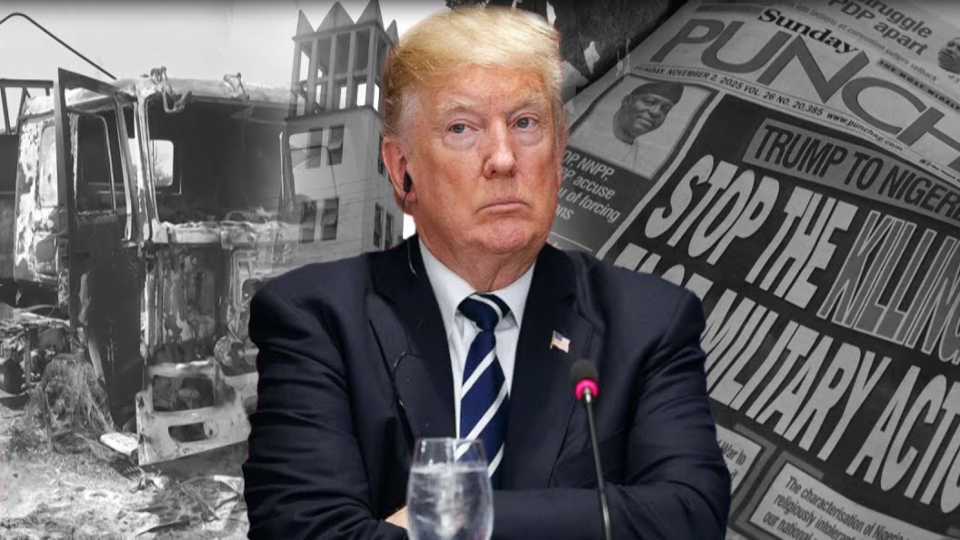
Trump Warns of Potential US Military Action in Nigeria Amid Reports of Christian Persecutions
Washington, DC - November 3, 2025 - In a stark escalation of rhetoric on international religious freedoms, President Donald Trump has indicated that the United States could deploy troops on the ground in Nigeria or launch air strikes to address what he describes as rampant killings of Christians by Islamist insurgents. The comments, delivered during a press interaction aboard Air Force One on Sunday, mark a significant shift in US foreign policy toward Africa's most populous nation and have sparked immediate diplomatic pushback from Nigerian officials.
Trump's remarks come amid heightened concerns over escalating violence in Nigeria's northern and central regions, where groups like Boko Haram and its splinter factions have been accused of targeting Christian communities in a pattern that some observers label as targeted persecution. The president framed the situation as a "genocide in the making," pointing to recent reports of dozens of Christians killed in ambushes, church burnings, and village raids over the past several months. "These people are being slaughtered, and we cannot stand by," Trump stated, emphasizing that the US has a moral and strategic imperative to intervene if Nigerian authorities fail to curb the bloodshed.
Pressed by reporters on the specifics of potential US involvement, Trump was direct yet measured in his response. "Could be troops on the ground. Could be air strikes. Whatever it takes to stop this killing," he said, adding that he had already directed the Pentagon to explore operational plans. In a separate address on Saturday, Trump adopted an even more aggressive tone, vowing to enter Nigeria "guns-a-blazing" if necessary to protect vulnerable populations. He likened the scenario to past US interventions, suggesting that swift action could prevent a broader regional crisis involving instability and refugee flows.
The White House has not released a formal timeline for any decision, but sources familiar with the discussions indicate that military planners are reviewing options ranging from targeted drone operations to special forces deployments in support of Nigerian troops. Trump underscored that any action would prioritize precision to minimize civilian casualties, while also tying the threat to broader US interests in countering Islamist extremism across the Sahel region. "Nigeria is a key partner, but partnership means action, not excuses," he remarked, criticizing what he called delays in Abuja's response to intelligence shared by US agencies.
Nigeria's government reacted swiftly to the president's statements, welcoming American assistance in combating terrorism but firmly rejecting any notion of unilateral US military operations. In a statement issued late Sunday, the Nigerian presidency affirmed that the country is committed to rooting out insurgents through its own forces and international collaborations, such as those under the Multinational Joint Task Force. "We appreciate the concern for our citizens, but any support must respect our sovereignty and be coordinated with our military leadership," a spokesperson said. The official also disputed characterizations of the violence as a deliberate Christian genocide, attributing most incidents to the insurgents' broader campaign against all civilians in pursuit of territorial control and ideological dominance.
Human rights advocates have been divided in their assessments. Groups monitoring religious freedoms, including those tracking Fulani herder-farmer clashes that often pit Muslim and Christian communities against each other, have documented over 200 deaths in the past quarter alone, with Christians disproportionately affected in certain hotspots like Plateau and Benue states. "President Trump's attention could galvanize global pressure, but boots on the ground risk inflaming local tensions," one analyst noted. Conversely, Nigerian civil society leaders expressed alarm that foreign intervention might undermine domestic reconciliation efforts and provide propaganda fodder for extremists.
This is not the first time Trump has spotlighted Nigeria's security challenges during his second term. Earlier this year, the administration ramped up non-lethal aid, including intelligence sharing and training programs, following a similar flare-up in attacks. However, the prospect of direct combat involvement represents a departure from the more restrained approach of previous administrations, which favored diplomatic channels and economic incentives to encourage reforms in Nigeria's counterterrorism strategy.
As tensions simmer, the international community watches closely. The United Nations has called for de-escalation and renewed dialogue between conflicting communities, while European allies have urged multilateral solutions over unilateral moves. For now, Trump's words hang heavy, serving as both a warning to insurgents and a test of US-Nigeria relations. Whether they translate to action remains uncertain, but the signal is clear: the White House views the stakes in Nigeria as too high to ignore.