

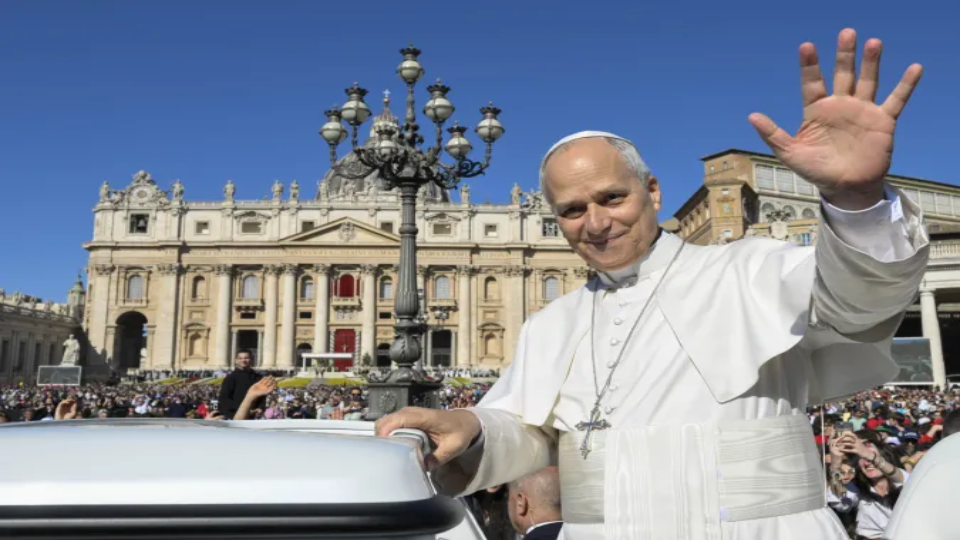
Pope Leo Begins 10-Day Africa Tour to Spotlight Continent’s Needs
Pope Leo starts a 10-day tour of four African countries on Monday with the goal of drawing global attention to the continent where more than one fifth of the world's Catholics reside. The first US pope will visit Algeria for two days followed by Cameroon, Angola and Equatorial Guinea, covering 11 cities and towns across nearly 18,000 kilometers on 18 flights. Cardinal Michael Czerny, a senior Vatican official and close adviser, said the visit aims to help turn the world's attention to Africa.
The 70-year-old pontiff, who remains in good health, has made only one major overseas trip since his election last May, traveling to Turkey and Lebanon in November and December before a visit to Monaco in March. This marks the 24th papal tour to Africa since the late 1960s. More than 20 percent of global Catholics live in Africa according to Vatican statistics, and over half the populations in Cameroon, Angola and Equatorial Guinea identify as Catholic. Algeria, an overwhelmingly Muslim nation of about 48 million people, has fewer than 10,000 Catholics and will host a Catholic pope for the first time.
Pope Leo is expected to deliver 25 speeches addressing issues such as the exploitation of natural resources, Catholic-Muslim dialogue and the dangers of political corruption. Cameroon and Equatorial Guinea have long-serving presidents accused of human rights abuses, which they deny. The largest event is scheduled for Friday in Douala, Cameroon, where up to 600,000 people are expected for Mass. The pope, fluent in several languages, will speak in Italian, English, French, Portuguese and Spanish.
The itinerary opens with a mid-morning arrival in Algeria on Monday for an address to political leaders and a visit to the Great Mosque of Algiers, only his second mosque visit as pope. On Tuesday he travels to Annaba on the northeast coast to visit the ruins of the ancient town of Hippo, a site of special significance for the Augustinian order to which he belongs because of its connection to fourth-century St. Augustine of Hippo.