

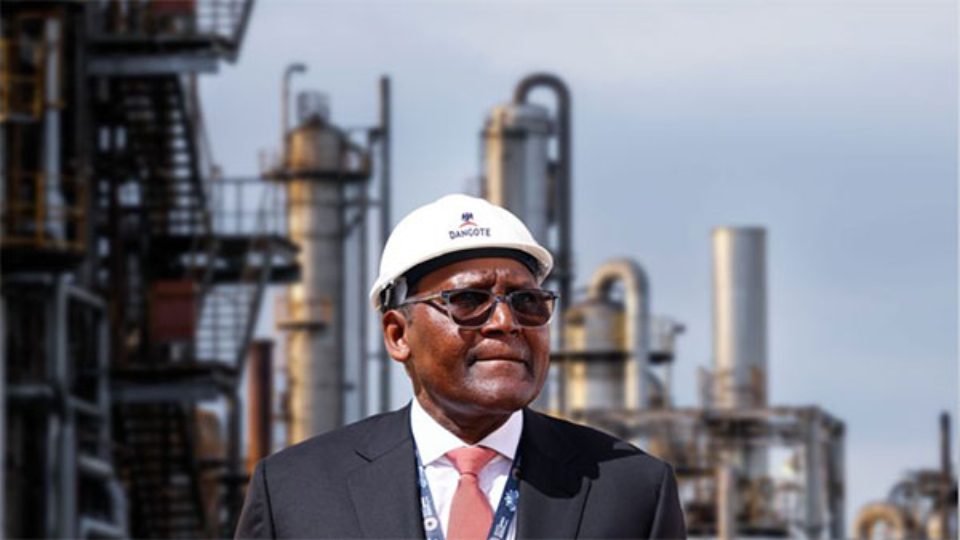
Nigerian Billionaire Aliko Dangote Considers Kenya for Massive Sh2.2 Trillion East African Oil Refinery
Nigerian billionaire Aliko Dangote, Africa's richest person for over a decade, is eyeing Kenya as a prime location for one of the continent's largest oil refining projects. The proposed refinery would represent a significant investment estimated between 15 billion and 17 billion US dollars, equivalent to approximately Sh2.2 trillion.
This ambitious initiative aims to build a facility with a capacity of 650,000 barrels per day in Mombasa. The project seeks to substantially reduce East Africa's reliance on imported refined petroleum products. Currently, the region imports all its refined fuel, primarily from the Middle East, making it vulnerable to global supply disruptions and price volatility amid geopolitical tensions.
Dangote highlighted Mombasa's advantages, particularly its larger and deeper port infrastructure, which would better support the scale of operations required for such a major refinery. He noted that Kenya offers a bigger economy with higher fuel consumption compared to other potential sites in the region.
The final decision rests with Kenyan leadership. Dangote emphasized that he would follow the guidance of President William Ruto, stating that whatever direction the president provides is what he would pursue.
This development follows recent discussions among East African countries about establishing a joint oil refinery at the Tanzanian port of Tanga. That proposal was modeled after Dangote's successful refinery operations in Nigeria. Dangote compared the two locations but pointed to Kenya's stronger market size and demand as key factors favoring Mombasa.
During an infrastructure summit in Nairobi last month, Dangote expressed confidence in replicating his 650,000-barrel-per-day Nigerian model in East Africa, provided regional governments extend the necessary support.
The potential refinery promises to enhance energy security across East Africa by creating local refining capacity, stabilizing fuel supplies, and potentially lowering costs for consumers while generating significant economic benefits through investment, jobs, and industrial growth.
As talks progress, stakeholders await clear political direction from Nairobi to determine whether Mombasa will host this transformative energy project.