

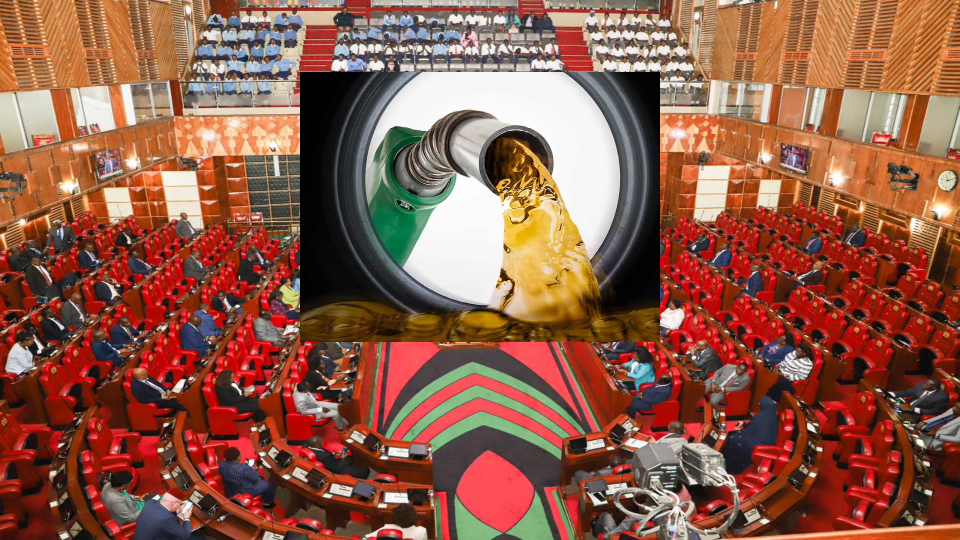
Parliament Directs Forensic Audit into Fuel Levy Collections Over Fund Irregularities
The Public Investment Committee on Commercial and Energy Affairs in Kenya's Parliament has mandated a forensic audit of collections and disbursements related to the fuel levy, targeting discrepancies in the Road Maintenance Levy Fund (RMLF). The directive comes after scrutiny of financial reports revealed unexplained variances in allocations and outstanding payments.
The decision was made during a session chaired by Pokot South MP David Pkosing, who emphasized the need for thorough verification of fund flows. The audit will focus on collections handled by the Kenya Revenue Authority (KRA), disbursements managed by the Kenya Roads Board, and transfers to various road agencies.
Auditor-General Nancy Gathungu flagged several issues in her reports, including receivables from non-exchange transactions amounting to 5.53 billion shillings and grants owed by the Kenya Roads Board totaling 5.08 billion shillings. A notable unexplained variance of 2.755 billion shillings emerged between the audited statements of the Kenya Roads Board, which recorded a disbursement payable to the Kenya Urban Roads Authority (KURA) at 2.322 billion shillings, and other records. Additionally, the accuracy and completeness of grant receivables worth 5.178 billion shillings could not be confirmed.
KURA faced particular attention due to its rising pending bills, which grew by 3.078 billion shillings, or 25 percent, from 12.28 billion shillings in 2021 to 15.4 billion shillings by June 30, 2022. These payables included 14.18 billion shillings in current liabilities and 1.18 billion shillings in non-current obligations, with 14.15 billion shillings owed to suppliers and contractors. Committee members expressed concern that such accumulated bills could disrupt operations, affect cash flow, and lead to unnecessary interest and penalties.
During the proceedings, KURA Director-General Silas Kinoti explained that the 5.178 billion shillings in grants were properly recorded and received at the beginning of the 2022/23 financial year. The committee, however, instructed the Auditor-General to proceed with the forensic audit covering the financial years 2020/21 through 2022/23 to trace the full chain of collections, disbursements, and allocations.
The fuel levy, imposed on petroleum products, generates revenue collected by KRA and channeled through the Kenya Roads Board to support road maintenance and development across agencies like KURA, the Kenya National Highways Authority, and the Kenya Rural Roads Authority. Recent concerns over transparency in these flows prompted the parliamentary intervention.
In addition to the audit, the committee required KURA to provide updates within three months following the adoption of the report, detailing plans for securitization of the RMLF and efforts to clear outstanding bills.
This move underscores ongoing efforts to enhance accountability in the management of public funds dedicated to infrastructure, amid broader discussions on efficient utilization of levy revenues for road improvements nationwide.