

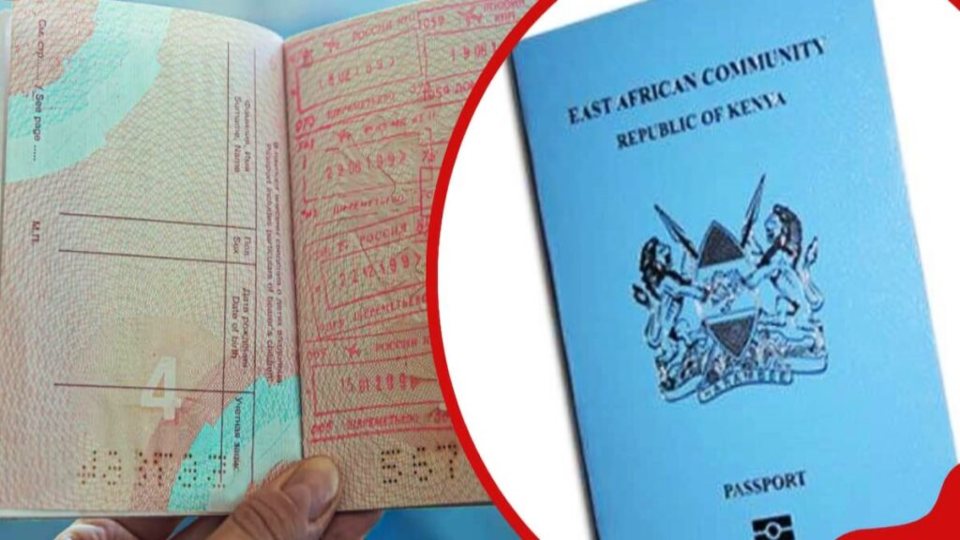
Parliament Divided on Allowing Expired Passports as Voting Identification for 2027 Polls
Members of the National Assembly are sharply divided over a proposed change that would let Kenyan citizens by birth vote in the 2027 General Election using passports that have expired, as long as those documents were still valid when the individuals first registered as voters.
The amendment forms part of the Elections Amendment Bill of 2024, which is currently under consideration by the National Assembly Justice and Legal Affairs Committee. The committee has lined up the change for debate during the Bill’s third reading. The proposal would treat a passport that was current at the moment of registration as acceptable identification at the polling station even if its expiry date falls before election day.
Committee chairman George Murugara, the Member for Tharaka, has strongly backed the idea. He maintains that the expiry of a passport does not strip a person of Kenyan nationality or of the political rights that flow from citizenship. According to him, an expired passport may no longer allow international travel, yet it should not be used as a reason to deny someone the chance to vote.
Supporters of the amendment argue that political rights belong to the citizen, not to the physical document. Homa Bay Town MP Peter Kaluma has posed the question of whether the simple expiry of an identity card or passport can ever cancel a person’s status as a Kenyan by birth. In their view, disqualifying voters solely because a document has run out would amount to unnecessary disenfranchisement.
Opposition to the proposal is equally firm. Kinangop MP Kwenya Thuku has insisted that an expired passport is no longer a valid legal instrument and therefore cannot serve as proof of identity at an election. He argues that once the document has lapsed it ceases to confer any rights and should not be accepted by electoral officials.
The disagreement has raised broader legal concerns inside Parliament. Some legislators warn that allowing expired documents at the polls could open the door to court challenges questioning the validity of the entire election. The debate has focused on three core questions: whether an expired passport remains a legal document for electoral purposes, whether it carries the same weight as a current passport or a national identity card, and whether dual citizens risk losing recognition of their Kenyan status if they fail to renew their passports.
In its present wording, Section 5(3) of the Bill provides that any Kenyan citizen who has reached the age of eighteen, as shown by either a national identity card or a Kenyan passport, and whose name does not yet appear on the voters’ register, may apply to the Independent Electoral and Boundaries Commission to be registered. The accompanying Memorandum of Objects and Reasons states that the principal purpose of the Bill is to amend the Elections Act of 2011.
Clause 2 of the Bill proposes several definitional changes. It introduces new meanings for the terms nomination, political party and nomination day. It also inserts the word “valid” immediately before the phrase “Kenyan passport” in the definition of an identification document, and it adds a definition of the registration of candidates.
The committee is expected to continue its examination of the Bill in the coming sittings. How the House ultimately resolves the dispute over expired passports will determine whether thousands of registered voters who rely on passports rather than national identity cards will face additional hurdles when they turn out to cast their ballots in 2027.