

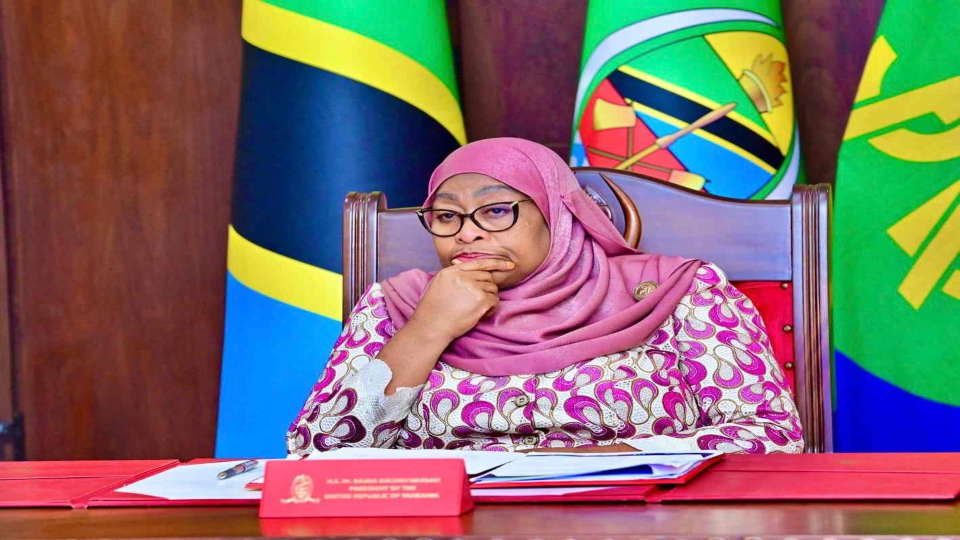
President Samia Suluhu Hassan’s Family Appointments Spark Nationwide Outrage Over Nepotism
Dodoma, Tanzania – President Samia Suluhu Hassan has elevated members of her immediate family to key government positions, drawing accusations of blatant nepotism and a dangerous slide toward dynastic rule. The moves, announced just days after her landslide reelection, have fueled protests in the streets of Dar es Salaam and a torrent of criticism on social media, with opponents decrying the appointments as a betrayal of democratic principles.
The most contentious decisions center on President Hassan's daughter, Wanu Hafidh Ameir, who has been named Deputy Minister of Education, Science, and Technology, and her husband, Mohammed Mchengerwa, appointed as Minister of Health. Wanu Hafidh Ameir, a sitting Member of Parliament on a special seat since 2016 and previously a representative in the Zanzibar House of Representatives, steps into a role overseeing critical aspects of Tanzania's educational reforms and technological advancements. Her husband, the Member of Parliament for Rufiji and a veteran in government service, transitions from his prior position as Minister of State in the President's Office for Regional Administration and Local Government, which he held since 2023, to lead the nation's health sector amid ongoing challenges like disease outbreaks and healthcare infrastructure gaps.
This dual appointment of a married couple to high-stakes portfolios has amplified concerns about conflicts of interest and the erosion of merit-based governance. Adding to the controversy, the reshuffle also saw Ridhiwani Kikwete, son of former President Jakaya Kikwete, elevated to Minister for Governance. This inclusion extends a pattern of favoring politically connected families, evoking memories of past administrations where familial ties influenced key decisions.
The timing could not be more charged. The announcements came mere days after the National Electoral Commission declared President Hassan the victor in the October 29, 2025, presidential election, where she secured an overwhelming 97.66 percent of the vote. Opposition leaders and civil society groups immediately condemned the results as uncompetitive, pointing to the disqualification of major challengers and restrictions on political freedoms that stifled genuine contestation. In Dodoma, as Hassan received her certificate of victory, she reaffirmed her commitment to national unity and progress, but her words rang hollow for many who view the cabinet changes as an extension of electoral irregularities.
Public reaction has been swift and visceral. In urban centers like Dodoma and Dar es Salaam, small-scale demonstrations erupted outside government buildings, with protesters chanting slogans against "family rule" and holding signs reading "Merit Over Bloodlines." Social media platforms, particularly X (formerly Twitter), exploded with hashtags like #SamiaNepotism and #TanzaniaFamilyCabinet, amassing thousands of posts within hours. Users from across East Africa weighed in, with one prominent commentator labeling the reshuffle a "family takeover in broad daylight," warning that it signals the death of objectivity in public service and risks turning Tanzania's government into a "family business masquerading as a state." Another viral thread posed the dilemma bluntly: "Nepotism or merit?" sparking debates that garnered over 20,000 views and hundreds of replies, many highlighting how such appointments undermine public trust in institutions meant to serve all citizens equally.
Opposition figures have been unrelenting in their condemnation. Leaders from parties like Chadema have long accused Hassan's administration of intolerance toward dissent, including crackdowns on media and arrests of activists. This latest development, they argue, cements a legacy of power consolidation within a narrow elite circle, reversing gains made under previous reforms. One critic noted that placing relatives in charge of education and health, sectors vital to Tanzania's youth and vulnerable populations, prioritizes loyalty over expertise at a time when the country grapples with high youth unemployment and strained public services.
Defenders of the president, primarily from the ruling Chama Cha Mapinduzi (CCM) party, counter that the appointees bring proven experience and parliamentary credentials to their roles. They frame the reshuffle as a strategic move to inject fresh energy into the government following the election, emphasizing Wanu Hafidh Ameir's background in legislative work and Mchengerwa's administrative track record. Yet, these justifications have done little to quell the storm, as analysts point to a broader historical context: Tanzania's post-independence politics have occasionally flirted with familial influences, but never so overtly under a sitting leader. Comparisons to neighboring countries, where similar practices have led to instability, only heighten the stakes.
As Tanzania navigates this pivotal moment, the appointments raise profound questions about the future of its democracy. Will this spark sustained reform demands, or will it entrench a new era of personalized authority? With the cabinet now reflecting deep familial imprints, citizens are left grappling with a government that feels increasingly distant from the people it serves. The coming weeks will test whether outrage translates into action, or if the weight of institutional inertia prevails. For now, the echoes of discontent reverberate far beyond Dodoma's halls of power.