

Ruto Calls for Land Consolidation to Protect Family Farms from Endless Subdivision
President William Ruto has urged Kenyans to stop breaking up family land into ever smaller plots, warning that rapid population growth is squeezing the country’s agricultural resources and threatening food security and rural livelihoods.
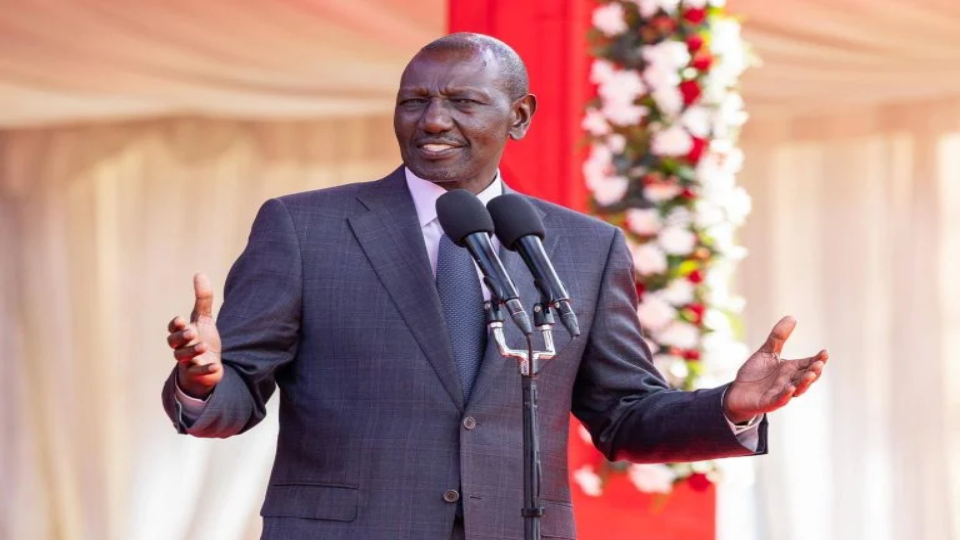
Speaking during a church service in Kakamega on Sunday, 11 October, the President proposed a shift toward land consolidation. Under this approach, families would build homes in organised settlements while keeping larger, continuous portions of land available for food production and cash crops such as coffee and vegetables.
Ruto cautioned that the common practice of subdividing farms among children leaves successive generations with parcels too small to support meaningful farming. Parents who repeatedly carve out plots for new houses risk eliminating the fields that once provided both food and income. He stressed that organised residential clusters would allow growing households to house their children without sacrificing productive farmland.
The President argued that Kenya must find ways to accommodate its expanding population without steadily reducing the land available for agriculture. By living in planned settlements rather than scattering houses across every acre, families could preserve enough ground to grow crops and generate income across generations.
His proposal draws on an existing legal framework. The Land Consolidation Act, Cap 283, already provides for the consolidation of scattered parcels, the determination of land rights, and the registration of ownership in designated areas. The process requires recording existing interests, surveying and demarcating land, consolidating parcels, and preparing an adjudication register. Affected parties have a 60-day window to lodge objections. Adjudication officers, demarcation officials and local committees play central roles in establishing customary rights, and any fees charged can be recovered as civil debts.
The idea also aligns with the government’s affordable housing programme, which relies on public land and parcels transferred from state agencies to create planned residential developments. Ruto has repeatedly maintained that developing such land for housing protects it from illegal grabs while meeting citizens’ shelter needs, and that organised settlements can ease the pressure on productive farmland.
By encouraging consolidation and planned living arrangements, the President is seeking a practical balance between the housing demands of a growing population and the need to keep enough land under cultivation to feed families and support rural economies.