

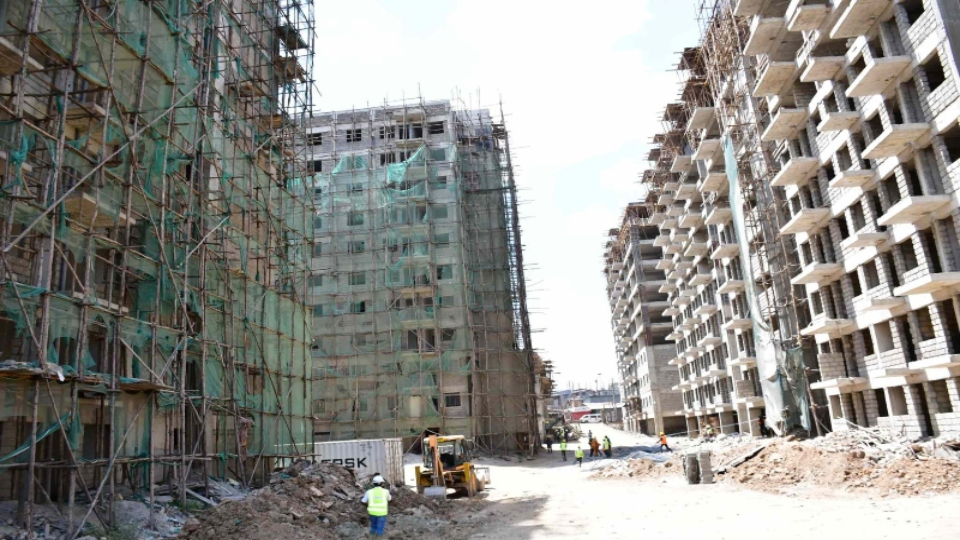
Government to Prioritize Massive Affordable Housing Investments After 2027 Elections, Budget Projections Reveal
Fresh budget estimates tabled in the National Assembly project a significant increase in government spending on affordable housing following the 2027 General Election. This surge will be driven primarily by expected revenue from sales of completed housing units.
According to the budget outlook, total expenditure on affordable, social, and institutional housing, along with related infrastructure, is set to reach 360.1 billion shillings in the 2027/28 financial year. This marks a 227.3 percent rise from the 110 billion shillings allocated for the upcoming financial year starting in July.
Sales receipts from housing units are anticipated to play a central role in financing further expansion of the affordable housing program after the polls. This approach signals a growing reliance on self-generated funds to sustain and scale the initiative.
The post-election plan positions housing as the largest single recipient of development funds within government expenditure. It is expected to outpace the roads sector, which is projected to receive 197.93 billion shillings in the 2027/28 financial year.
For context, road spending is forecast at 176.86 billion shillings in the election year ending June 2027. This represents an increase from the current approved allocation of 92.84 billion shillings, yet it will still fall short of the planned housing budget in the subsequent year.
Within the broader housing portfolio, allocations specifically for affordable housing are projected to nearly quadruple to 201.1 billion shillings after the elections. This comes from 50.7 billion shillings planned for the 2026/27 financial year. The increase follows a temporary reduction during the election period, where affordable housing funding was cut by 30.9 percent from the current financial year's approved 73.3 billion shillings.
The anticipated jump in spending draws from stronger expected collections under the housing levy, introduced in July 2023, combined with substantial proceeds from unit sales. This reflects an evolving financing strategy that moves beyond heavy dependence on the levy alone. Completed units under construction are expected to be sold or occupied through tenant-purchase schemes over the coming two years. The resulting revenue stream should generate billions of shillings available for reinvestment in new projects.
Infrastructure developments tied to these housing estates will expand in parallel. Key components include roads, drainage systems, sewerage networks, and street lighting to support the growing number of units.
This strategic shift underscores the government's commitment to accelerating affordable housing delivery once the election cycle concludes, aiming to address ongoing demand through a more sustainable, revenue-backed model.