

Kenya and France Sign 11 Landmark Agreements to Deepen Bilateral Cooperation Across Key Sectors
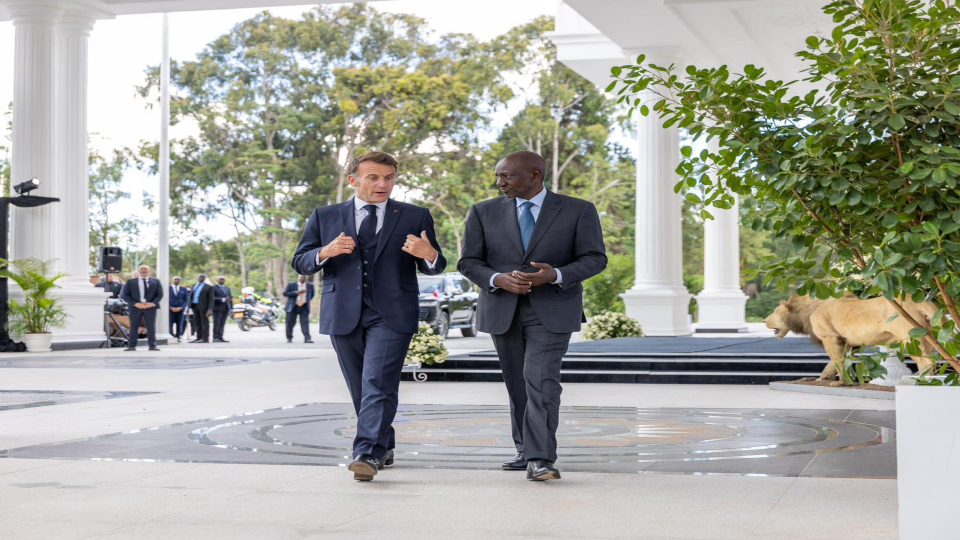
President William Ruto and French President Emmanuel Macron have sealed 11 major agreements aimed at strengthening the longstanding partnership between Kenya and France. The deals, signed at State House in Nairobi on May 10, 2026, cover critical areas including transport, energy, technology, agriculture, health, education, and the blue economy.
The agreements were witnessed following bilateral talks between the two leaders, as Kenya hosts the Africa Forward Summit from May 11 to 12, 2026. This marks a historic occasion, being the first time the summit is held outside France or a Francophone African country in more than five decades.
President Ruto highlighted the deep diplomatic ties between the two nations, which date back to 1963 when France was among the first countries to recognize Kenya's independence. He described the new pacts as a reflection of an evolving strategic engagement that benefits the people of both countries through shared interests in innovation, growth, and sustainable development.
Key among the agreements is the rehabilitation and modernization of the Nairobi Commuter Rail project, valued at 83 million euros (approximately Sh12.5 billion). This initiative will serve as a central pillar in transforming urban mobility in the capital. It includes expansion and upgrading of major corridors linking Nairobi to satellite towns such as Syokimau, Embakasi, Ruiru, and Kikuyu. New extensions, including the ongoing Riruta-Ngong line, will further enhance connectivity across the metropolitan area.
In logistics and infrastructure, Kenya and France established a joint venture to develop and finance projects worth about 800 million dollars (Sh104 billion). This focuses on improving port and logistics capabilities to support economic growth.
The agriculture sector received a boost through an agreement to promote Kenyan premium purple tea varieties in French retail markets. This is expected to drive exports, encourage value addition, and increase incomes for Kenyan farmers.
Energy cooperation features prominently. The two countries agreed to expand the Kipeto Wind Energy Development Project by an additional 100 megawatts at a cost of 250 million dollars (Sh32.5 billion). They also secured financing for the raising of Masinga Dam and the modernization of Kenya's climate and weather services. Collaboration on the production of sustainable aviation fuel in Kenya was another key outcome.
On nuclear energy, the leaders agreed to partner in its peaceful use as Kenya advances its ambitious target of up to 10,000 megawatts of electricity generation capacity. President Ruto noted that Kenya stands to gain significantly from France's expertise in this field.
Digital transformation forms a core part of the deals. Agreements target digital infrastructure, artificial intelligence, cybersecurity, digital public services, and data systems. President Ruto emphasized Kenya's efforts to build a dynamic digital economy through projects like Konza Technopolis and the Digital Superhighway, positioning the country as a technology hub for East and Central Africa. French President Macron stressed that Kenyan engineers would play a leading role in AI projects.
In the health sector, the partnership will strengthen digital health systems, laboratory services, and epidemic preparedness. This includes better use of real-time data for early disease detection and response, enhancing Kenya's resilience to future outbreaks.
Education and skills development saw important advancements. The University of Nairobi Engineering and Science Complex project, valued at 35 million euros (Sh5.6 billion), has entered the implementation phase, with design finalized, procurement underway, and contractor onboarding expected later this year. Additional support will equip four universities with modern engineering laboratories and equipment for mechanical, electrical, and civil engineering training. Cooperation in STEM fields and Technical and Vocational Education and Training programs was also enhanced.
The two presidents discussed improving air connectivity between Kenya and France to unlock greater potential in trade, tourism, and investment. Current limitations in flight frequency, capacity, and routing were noted as constraints that need addressing to benefit sectors like tourism, fresh produce exports, flowers, seafood, and Kenya Airways operations.
On broader issues, Presidents Ruto and Macron reaffirmed commitments to multilateralism, climate action, and reforms in the global financial system to provide fairer access to financing for developing nations. They emphasized moving beyond dialogue to concrete implementation, focusing on investment, innovation, and measurable results. The summit is expected to support France's agenda at the upcoming G7 Summit.
French companies already active in Kenya in energy, telecommunications, logistics, infrastructure, and renewable energy are set to expand their presence through these new frameworks. President Macron announced that projects worth over one billion euros were being advanced as part of the partnership.
These comprehensive agreements signal a new chapter in Kenya-France relations, oriented toward practical cooperation, sustainable development, and mutual prosperity.